Knowing When to Call the Metal Manufacturer: Part 2

As stated in Part 1 of this series, the success of a metal roof or metal wall project can rest on the installer knowing when something isn’t working or just doesn’t seem right. When that happens, a call to the manufacturer is not just suggested but is really imperative to ensure any potential problem is averted before it’s too late. In addition to the previously discussed scenarios, such as damage to the physical panel or problems with the fasteners, let’s take a closer look at a few other common circumstances under which MBCI recommends immediately reaching out to the manufacturer:

Alignment and Substrate Issues

It is the installer’s responsibility to verify the substrate and check for proper alignment before attaching any sheeting materials. If the installer notices any issues of this sort (either before installation or once they start putting on the sheeting), they should stop and address them immediately. This might include oil canning or other irregularity in the appearance of the panel. The installer should investigate the source. If unable to identify and properly remedy the situation on their own, then a call to the manufacturer’s support team is recommended. They may be able to suggest items to check to help locate the source of the problem—whether it be installation or manufacturing—and from there make suggestions as to the best possible means to address the situation.

Accessories

When physically getting ready to modify a panel system by adding things to the roof (such as snow guards or mechanical curbs) or to walls by installing doors, windows and louvers, these penetrations can have an impact on the system and its weather-tightness and appearance. Oftentimes, other trades—who may or may not have knowledge of the sheeting system—are coming onto the job to perform the accessory installation. It’s wise to visit with manufacturer prior to installation and/or alert the non-metal panel installer of precautions to take when adding accessories.
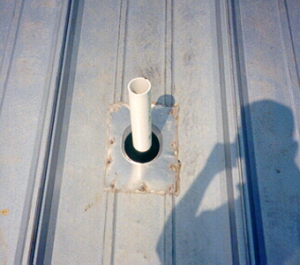
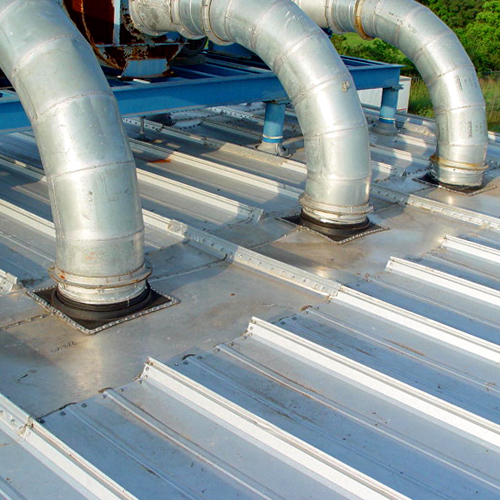
bad roof jack installation - part #2 ACCESSORIES SECTION
The pipe penetration shown here is not the correct type of piping for metal roofing, and not the correct installation. This can lead to issues with roof performance, including leaking and water damage.

Coordination regarding material types of accessories, fasteners and placement is critical. There are materials that can react negatively with the installed system and lead to damage as well as void manufacturers warranties. Accessories should always be discussed prior to installation. Read more about different types of roof accessories and penetrations in MBCI’s blog article, Roof Penetrations Made By Non-Roofing Contractors.

Panel Engagement

Panel systems have an engineered means by which the panels attach and engage one another as shown in the manufacturer’s installation manuals and project drawings. If at any point the panel will not engage as depicted in the details, installation should be halted and reviewed to determine the cause. This can require a call to the manufacturer to help determine if the matter is site and substrate related or potentially a manufacturing issue.

Do not continue to install the system if the laps are not nesting properly, clips are not engaging as detailed, panel modularity cannot be controlled or if the overall panel is not “resting” on the substrate such that there is excessive bowing and stress in the panel. This is the time to call the manufacturer, as once the material is completely installed, it is much more difficult to determine the cause of a problem and is potentially more expensive to remedy. Additionally, in many cases, full installation constitutes acceptance of the product and the manufacturer’s hands could be tied or extremely limited in being able to assist in remedying after the fact.

By knowing when to be proactive with a call to the manufacturer, installers can mitigate many types of potential pitfalls. And if you’re just not sure, it’s best to call.

For more information on metal roof and wall products and training, MBCI offers courses through its Metal Institute. These courses are available for general training purposes or for those seeking installer certification.
Knowing When to Call the Metal Manufacturer: Part 1

Metal panel installers have a tough job—not only navigating the details of the task at hand but also being confident enough to know when to seek the manufacturer’s guidance. Part of overseeing a successful project is for the installer to know when something is out of his or her comfort zone, beyond their expertise, or just doesn’t look or feel right. And when that’s the case, it’s imperative to call on the manufacturer for input before it’s too late.

Technical support, such as MBCI’s Ask the Technical Expert, can be most useful for answering upfront general product questions. Once the project has started or material is on the jobsite, it’s generally preferable for the installer to go through their sales person or field service/customer service representative rather than sending a question via a website.

When to Seek Assistance from the Manufacturer

First things first: The installer should study the installation manual and construction drawings. If, after that, he or she is experiencing a problem—for instance, the panel doesn’t look right, it’s not engaging properly, it’s not meeting the tolerances stated in the manual, the fasteners that are called out in the drawings are not working or are even missing—then contacting the manufacturer should be the next step. That one simple call can save a lot of time in potential headaches.

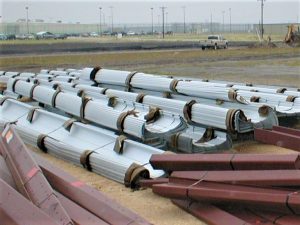
Improper Storage of Metal Panels
The above image depicts damage to metal panels caused by improper storage, rendering them unable to install properly.


While it’s not the manufacturer’s direct responsibility to make sure the installer is doing the job on site per the drawing details, a reputable manufacturer can at least provide recommendations when asked how to possibly alleviate or mitigate any number of potential pitfalls, or share common oversights that other installers have made—and how to avoid those same mistakes.

Top Circumstances

Here are two of the top circumstances under which MBCI recommends immediately reaching out to the manufacturer:

  1. Damage to the physical panel itself. If a customer receives materials and there’s suspected or noticeable damage to it, he or she may or may not know what impact that damage could initially have on the system. Notify the manufacturer immediately to assess if it’s a minor issue or if the panels should not be installed because it will be detrimental to the system. No one wants to have to reorder or wait for new materials, but it’s worse to wait until after installation when the impact of removing/replacing is significantly more costly and time-consuming.
  2. Fasteners. Contact the manufacturer if the substrate on site changes in any form from the project details, there is any difficulty with the screws themselves engaging, or any problems with the fastener type. When installing fasteners, make sure to use the ones per the installation details. The manufacturer can assist in verifying the correct fastener is being used in the correct location per the details and per the substrate on site. There could be situations where the installer is not accurately reading the drawing or has substituted an alternative screw not supplied by the manufacturer. Don’t assume. Instead, call.

There are, of course, other scenarios when a call to the manufacturer will save time, money and aggravation for all parties involved in an installation, including alignment and substrate issues, the addition of accessories, and problems with panel engagement. In Part 2 of this topic, we will go into more detail on these additional circumstances.

For more information on metal roof and wall products and training, MBCI offers courses through its Metal Institute. These courses are available for general training purposes or for those seeking installer certification.
Useful Tool: FM Wind Ratings RoofNav

The concept of testing materials and assemblies in buildings has been around since the late 1800s, when John R. Freeman initiated Factory Mutual Laboratories (now known as FM Approvals) to test fire protection systems. Since then, the use of FM-approved building components and assemblies has become recognized as an accepted safety standard for insurance companies, building inspectors, design professionals, and building owners. In the case of roofing systems, FM is particularly well known for determining how roofing performs not only for fire, but also for high wind. In fact, it is unique among other testing laboratories in the way that it performs wind uplift testing – it uses full-scale roof sections measuring 12 feet by 24 feet to obtain an accurate view of expected real-world performance. Further, it tests not only individual products, but full assemblies. In the case of metal roofing, for example, that would include the metal roofing panels, the fasteners (e.g., screws), EPDM washers, seam sealant, and any insulation, all as attached to a specific roof deck or structure.

Is it Approved by FM?

To find out if a roofing product or assembly has been approved by FM based on its independent testing, the best place to look is on the FM roof navigation website, known as RoofNav. Registration is free and offers access to FM’s fully searchable, comprehensive database.

How to Use FM RoofNav

Here is a quick overview on using the website:

  • My Projects Tab: The opening page is on the “My Projects” tab, which welcomes the user to RoofNav and lets a registered user save and return to specific data searches.
  • Product Search Tab: The second tab at the top of the web page is labeled “Product Search,” and allows a user to enter information under search criteria based on a manufacturing company and/or a trade name, as well as selectable roofing categories (such as “cover”) and subcategories (such as “composite panel cover”). Clicking on the “search result” sub-tab will show all of the corresponding products tested, and their approved uses. If a specific manufacturer, such as MBCI, is entered in the search criteria, the results will show only for that manufacturer. Clicking on a particular result will open detailed specifications and information for that product.
  • System Search Tab: If a particular system is being sought, such as a fastening system or vapor retarder system, the “search criteria” portion under this tab can help narrow things down by name, type, and products.
  • Assembly Search Tab: Since the real performance of a roof is based not on a single product or system, but an entire assembly, it is possible to search either by “classifications,” using basic criteria, or by “specifications,” which allow a detailed roof assembly to be created. Either method will produce a list of “search results” that can be clicked on to get more details. This is likely the most useful tab when looking to determine if a total roof assembly will meet the wind uplift rating needed for a particular project, but it does require that the proper details are input.

The website also contains a number of very helpful ways to assist a user. A tab for a “ratings calculator” allows flexibility in the amount of information entered; a tab for “reference materials” provides drop-down assistance with tools such as a “quick-start guide.” Links for “help,” “support,” and “training” appear at the top of the page, along with a quick-search portal where a known FM assembly number can be entered and found directly.

The RoofNav tool is a great resource for anyone who wants to find out test-result information about any one or a series of roofing products, systems, or assemblies, and can be a go-to resource for contractors, designers, and specifiers of roofing systems of all types.

Combatting Thermal Bridging with Insulated Metal Panels

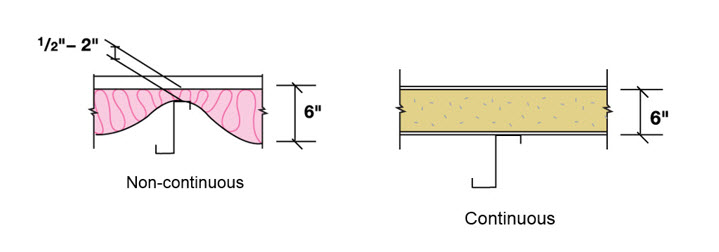
When using compressible insulation, say for instance fiberglass batt, consideration must be given to how that insulation is going to be deployed in the actual wall or roof. For instance, installers might place the insulation across the framing members and then smash it down with the cladding and run a screw through to the underlying structure. The problem here is that the insulation is rated with some R-value—and that R-value is determined by an ASTM procedure that also determines what its tested density is. So in essence, it’s ‘fluffy’ insulation.

One manufacturer’s insulation, however, might be thicker than another’s. The contractor is buying an R-value, not a density or a thickness. The insulation is tested to that R-value at whatever thickness and density¹ is needed to achieve it. Let’s say R-19 fiberglass batt is specified, but then it is put in an assembly and smashed down flat… now it’s not R-19 anymore; it’s now R-something else. That’s a thermal bridge—when the insulation’s R-value has been compromised.

Manufacturers have the ability to run long length panels that minimize the number of end joints. This continuity provides significant advantages over traditional insulated materials when designing for energy efficiency. This image illustrates the difference between fiberglass batting made discontinuous by compression between panel and framing members and the continuous insulation provided by insulated metal panels.

Unfortunately, thermal bridging is almost impossible to eliminate. In the example above, another choice might be to put it between studs. Except in this situation, the studs break the insulation. While it’s not pinched, the studs are separating it. Whether the studs are metal or wood, in either case it’s still a significant thermal short circuit or a thermal bridge.

Even with the highest quality insulation systems—insulated metal panels, for example—a joint is required. Building is not possible without putting neighboring panels together. Therefore, insulation is discontinuous. While it’s impossible to avoid thermal bridging, there are two requirements to ensure the building performs the way it needs to perform.

  1. Thermal bridging must be mitigated. In other words, the designer or installer has to try to eliminate as much of it as possible.
  2. If thermal bridging is unavoidable, it must be accounted for in some fashion, which usually means putting more insulation somewhere to make up the difference. This is called a “trade-off” and is allowed by most building energy efficiency codes.²

Why Insulated Metal Panels?

Insulated metal panels then are the best bet, because although the joint is a thermal bridge, in effect, it is not nearly as impactful as breaking a line of fiberglass with a stud or smashing the fiberglass between the panel and a framing member. In the illustration below, R-value doesn’t just vary at that point where the panel and the stud meet. The entire insulation line gets smashed and one would have to go some distance from the stud before the insulation returns to its normal, fluffy thickness. These issues need to be mitigated and accounted for.

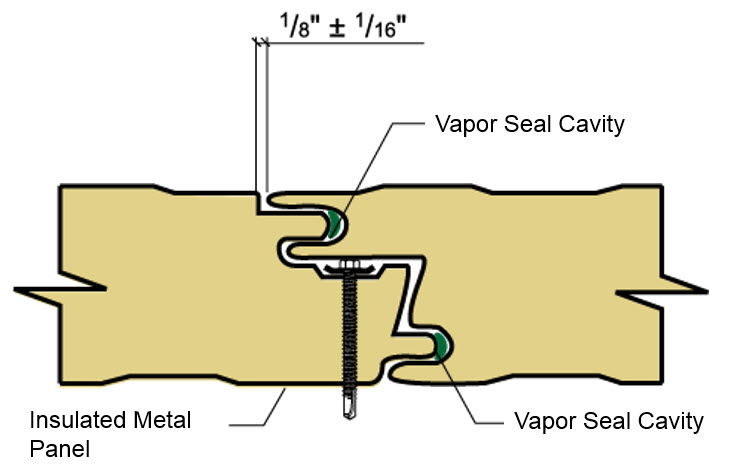
assembled side joint
Continuous insulation is critically important to an efficient envelope design. Insulated metal panels, with their side laps designed for concealed fasteners, eliminate the possibility of gaps in the insulation and thermal bridges. Continuous insulation is important because thermal bridges and discontinuities introduced by compressing non-rigid insulations cause the in-place R-Value of the assembly to be less than the tested R-Value of the insulation used. This effect has become a focus in newer energy efficiency codes such as ASHRAE 90.1 and IECC.

Manufacturers such as MBCI and Metl-Span publish insulated metal panels as U-factors because the joint is tested as part of the assembly (both mitigating and accounting for the aforementioned issues). These values can be found on product data sheets and technical bulletins, such as Metl-Span’s Insulation Values technical bulletin, published January 2017.

References

  1. ASTM C 665 – 12, Standard Specification for Mineral-Fiber Blanket Thermal Insulation for Light Frame Construction and Manufactured Housing, Table 1, Footnote c.
  2. ASHRAE 90.1 – 13, Energy Standard for Buildings Except Low-Ride Residential Buildings, Section 5.6
  3. High Performance Green Building Products – INSMP2A (CEU)

Tips for Installing Metal Roof Curbs

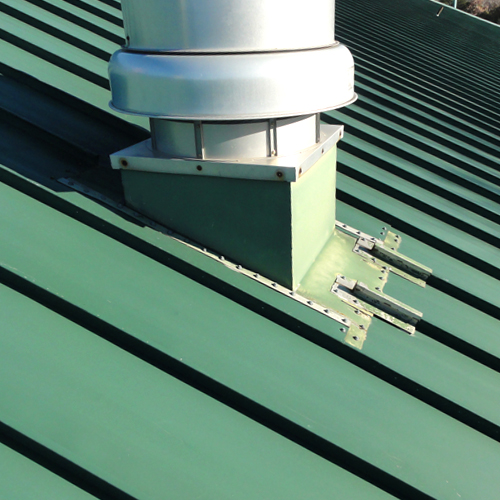
Metal roofs made from galvalume-coated steel provide great corrosion resistance and can readily satisfy a 20-year weather-tightness warranty. However, when a large penetration in the roof is needed, such as a large exhaust fan or other equipment, the integrity of the roof can be compromised if not addressed properly. The common method of dealing with large penetrations (i.e., spanning over one or more standing seams) is to install roof curbs that form the transition between the roof and the equipment being installed.

Of course, like most aspects of building construction, there are choices available in materials, methods, techniques, and styles of installing a roof curb. When the key objective is to provide a curb that will perform for the entire life of the standing seam roof, there are four key points to keep in mind.

Roof Curbs
Roof Curbs for Standing Seam Metal Roofs

Pick the Proper Material:

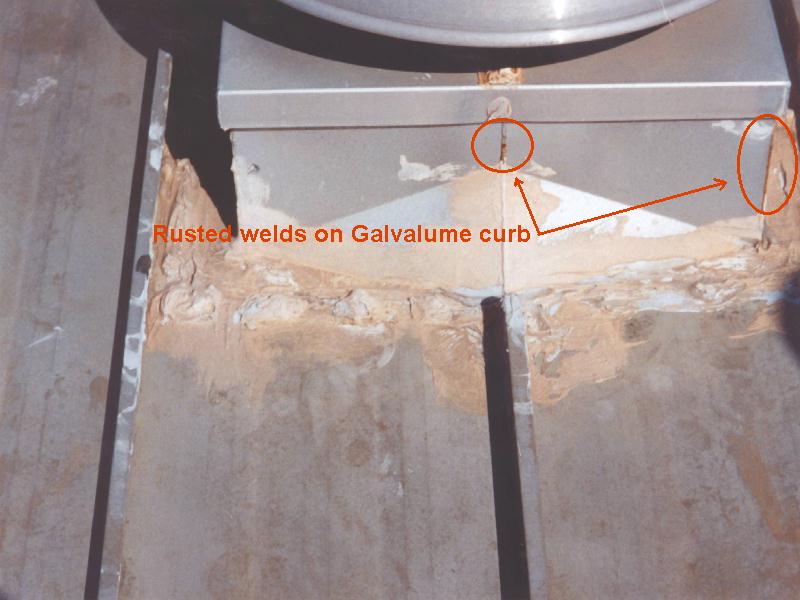
A galvalume-coated roof doesn’t mean that a galvanized steel roof curb is the best thing to use – in fact, galvanized roof curbs are known to rust, corrode, and leak, particularly along weld joints, as soon as a year after installation. Instead, a curb made from aluminum (preferred) or stainless steel should be used to prevent premature corrosion. To put any concerns about dissimilar materials and galvanic corrosion to rest, keep in mind that galvalume is approximately 80 percent aluminum by volume, so they are highly compatible.

Rusted Roof Curbs
Rusted Welds on a Galvalume Roof Curb

Use the Proper Roof Curb Type:

It is not uncommon for a roofer to choose a curb type referred to an an “over/over” curb, meaning that, after the opening is cut, the curb is installed over the roofing on both the upslope and the downslope sides. This might be the easiest to install during construction, but it will very likely create more work and callbacks when the upslope side starts to get water into or under the joint, and leaks. Instead, it is well worth taking a few extra minutes to install an “under/over” curb, which places the upslope side under the roofing in a true shingled lap between the curb and the roof. This way, the upslope edge is much more protected and less likely to leak using the same shingled condition occurring on the downslope side – all creating a properly water-shedding, weathertight condition.

Provide the Proper Water Flow Clearance:

We all know that water seeks the path of least resistance, so the key to keep water flowing down a roof is to avoid creating pockets of resistance. This is particularly true on the upslope end of a curb as well as on the two sides parallel to the slope of the roof. A curb with a minimum clearance of 12 inches between it and any other object on the upslope end will give water enough room to flow around the curb easily. Similarly, once the water reaches the two sides, at least 6 inches of free clearance is needed (i.e., without being encumbered by standing seams or other features) to allow the water to keep going and not back up to create a water head at the upslope end of the curb. Simply put, clearance means free-flowing drainage; lack of clearance can mean water buildup and leaks.

Install Roof Curbs Rib to Rib:

Installing curbs that rest in the flat, lower, panel area of metal roofing invites water tightness problems since the curb now has to be installed and sealed in the most vulnerable area – the surface where rainwater flows. Instead, coordinating the curb size with the rib spacing to provide a rib-to-rib curb eliminates fasteners down both sides of the curb in the pan of the roof panels. Placing the curb on and attaching it to the ribs also allows better transitioning from under the roofing on the upslope end to cover the roof on the downslope end. This type of curb has the added benefit of being able to be installed either during the roof installation of after the roof is finished.

Taking these four points into account in your next metal roofing project where roof curbs are required will help assure a well-installed, weathertight condition that should last just as long as the metal roofing system itself.

Evolution of the Metal Building Components Industry

Metal building components have been in use ever since iron and steel became commonly available during the 1800s. However, coordinated metal building components as we know them today really got their start during the 1900s, with a lot of significant developments happening just in the past 40 years. Here’s a quick overview:

1970s:

During the 1970s, the emerging metal buildings industry was primarily focused on providing pre-engineered solutions for commercial, industrial, and agricultural customers, mostly in the range of 10,000-square-foot buildings or less. The use of lighter-weight, tapered-end steel sections and bolted end-plate connections was beginning to be developed for widespread use, based on industry research. The development of technology that allowed for new methods of steel fabrication created growth for existing companies and helped new ones to form, such as MBCI in 1976. The energy crisis of the time brought interest in creating better insulation solutions.

Metal Building Components Plant Location
MBCI Lubbock, Texas Plant

1980s:

This was a period of growth along with the rest of the construction world. New plants and facilities were opening up in response to growing customer and market needs. New coating technologies were coming available that provided  better corrosion resistance and allowed for more customers to consider using metal buildings. Technical research into wind loading for walls and wind uplift for roofs brought updated means and methods to address these critical structural engineering conditions.

1990s:

During this decade, the volume of metal buildings and tons of steel processed nearly doubled. More building types were being constructed out of metal building components as architects, engineers, and owners saw the flexibility, time savings, and cost efficiencies involved. Retail facilities, offices, even schools started to incorporate metal buildings and their components into their planning and construction. With this growth and expansion, technical issues such as snow loads and employee issues such as OSHA regulations were hot topics of research and focus.

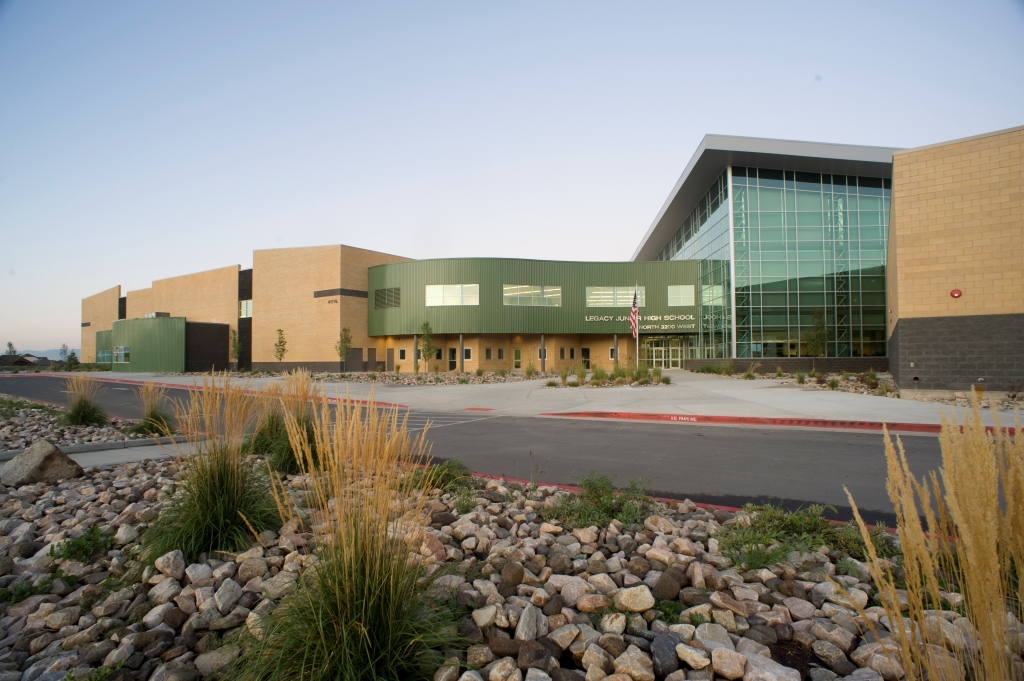
Metal Building Components featuring Legacy Junior High
Legacy Junior High School Featuring PBU Metal Panels

2000s:

With strong momentum and growing success around the country, the industry began to offer more-diverse product offerings and components. Insulated metal sandwich panels with both interior and exterior finishes became more common. New roofing finishes and appearances became available. Structural research into seismic effects on metal buildings was conducted in response to California earthquakes, and solutions were determined. Further work was done on energy performance of metal buildings in response to energy codes and customer requirements. Additional work was undertaken on updated engineering guidelines for tapered structural members and exterior wall and roof finishes and styles. This included the use of horizontal instead of vertical siding systems and smooth-surface solutions.

A Look at Today in the Metal Building Components Industry:

The metal building industry has clearly evolved and come a long way from somewhat humble beginnings. Today, full systems or components can be found in a wide range of buildings types, creating highly attractive solutions that are often not recognized as metal buildings. Continued industry research helps manufacturers provide high-quality products that meet the demands of the larger building industry. Continued collaboration and partnerships are helping to foster diversified product offerings and new market penetrations. Overall, the past 40 years or so have been just the beginning – the future of the industry looks strong, and prospects remain high for continued growth.

Roof Penetrations Made by Non-roofing Contractors

In our last two posts, we have looked at the proper ways for roofing contractors to address different types of penetrations in metal roofing in order to assure that a watertight seal is achieved from the outset, as well as over the life of the roof. But what happens when another contractor, such as a plumber, electrician, or other trade needs to penetrate the roof? How is the watertightness of the roof assured then?

Warranty Control for a Metal Roof

Most metal roofing warranties are very specific about what is included or not included should a roof leak occur. Therefore, the manufacturer’s warranty should be the first thing that is checked for a particular project to determine whether a seemingly innocent bit of work on the roof has the potential for a loss of warranty coverage. Commonly, qualified roofing contractors need to do the work and it needs to be inspected, but in some cases, supervised work may be acceptable too. Either way, any penetration installed by a trade contractor other than a roofing contractor should be fully coordinated with the architect or owner’s representative, the roofing manufacturer’s representative, the general contractor, and the roofing contractor. Once reviewed, there may be several options on how to proceed.

Guided Installation

For a single or simple penetration, say for a single small mechanical or electrical line, it may be possible to simply work with the trade contractor on the location of the penetration, review in advance that the proper materials are being used, and check the quality of the work for water tightness when complete. (Note: following the guidelines in our prior post on Pipe and Flute Penetrations will provide a good checklist of things to cover.) If everything is appropriately done, then it may be possible to have the roofing manufacturer add the new penetration to the list of items covered under the warranty.

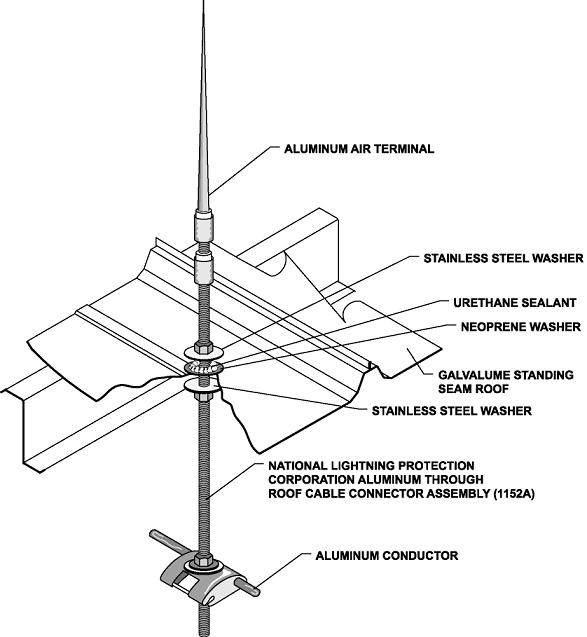
Lightning Rod
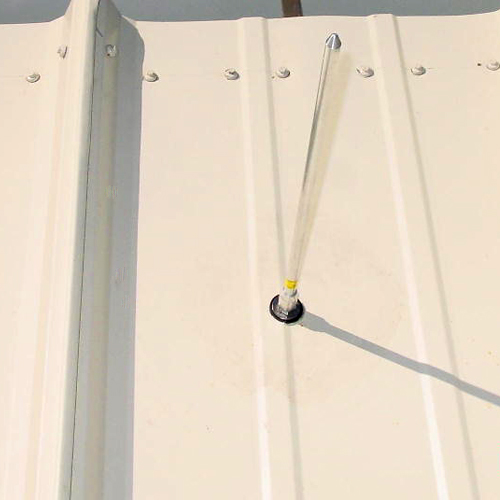
Lightning Rod Application for Metal Panels

Coordinated Installation

In some cases, numerous penetrations may be required, such as the installation of multiple lightning rods across a roof. In this case, it might be more prudent to consider a coordinated, cooperative effort to allow each trade to do what it does best and keep the warranty in effect. Instead of an electrician being responsible for the roof penetrations and for lightning rods, let him focus on the lightning protection and wiring aspects of the work. But first, bring in a roofing contractor to advise on the proper locations of the lightning rods and to be the one responsible for the watertight seal. Location advice would include things like avoiding valleys, standing seams, or other areas that are difficult to seal or flash around. The electrician could then make the needed lightning rod penetrations in the agreed-upon locations and complete his work. Following right behind, the roofing contractor could install retrofit rubber roof jacks around the lightning rods and assure that they are sealed properly. Alternatively, the roofing contractor could make the penetration and allow the electrician to install the lightning rod, while the roofing contractor installs an appropriate rubber roof jack over or around it. Either way, the two trades need to  review the process ahead of time and be sure that everyone is on board to produce the best results for everyone involved.

Bottom Line: Think Through Penetrations

roof penetrations
Standing Seam Roof Penetration

Standing seam metal roofs have become more complex in recent years, with more and varied types of roof penetrations. This simply magnifies the need for better communication between the design professional, roof manufacturer, general contractor, roofing contractor, and any of the various trades that might be working on the roof.

When everyone takes the time to plan up front and think through their own needs and the options to get there, everyone wins. The architect/owner representative can ensure that his or her clients get a roof that will perform long-term. The roof manufacturer is able to provide expertise that has been gained over a long period of time through working with similar details on roofs all over the country. The roofing contractor can leave the project knowing that the details are long-term and will mean little chance for leak callbacks. Plus, the general contractor and the building owner can quickly resolve any arguments over which trade is responsible for repairing a roof leak.

Structural Penetrations in Standing Seam Metal Roofs

In our prior post on “Pipe Penetrations in Standing Seam Metal Roofs,” we identified important guidelines for when pipe penetrations are made to metal roofing systems, typically after the metal roofing is installed. That means an opening is cut in the metal roofing, it is properly flashed or sealed, and the penetrating member is passed through it. However, some penetrations are already in place before the roofing contractor shows up. These can be things like vertical members resting on the building structure that support a platform for HVAC equipment above the sloped roof. Or, it can be parapet wall with offsets or other conditions that are already in place. In cases like this, a different approach is needed to assure that the roof remains watertight.

Equipment Platforms for Structural Penetrations

Penetrations
Structural Penetrations in Standing Seam Metal Roofs

From the standpoint of a roofer, a structural equipment platform is a pre-existing condition. The metal roofing industry already recognizes the need to address such situations, particularly on existing buildings, by offering retrofit flashing and curb products. The same, proven approach can be used when pre-existing conditions are encountered on new buildings as well. For example, when structural posts for equipment platforms are encountered running up through the roof plane, roof jacks and curbs specifically designed for retrofit applications should be used. The retrofit roof jack, or boot, should be made out of rubber and be designed to install around the penetration, rather than over it. The boot should ideally rest on a two-piece retrofit pipe curb which can span across one or more standing seams and create a smooth, flat surface for the boot to be attached and sealed. The two-piece design allows for the pipe curb to be properly shingled on the up slope and down slope side of the roofing, thus preventing a “backwater lap,” which will leak. Trying to use only products intended for new construction on such conditions will require unwarranted field modifications or an over-reliance on caulking and sealant, all of which can be prone to problems and failure of the watertight abilities of the roofing.

Parapets

The use of parapet walls around some or all of a perimeter of a building is a common condition. However, if the building shape varies, and the parapet along with it, then there may be some rather uncommon conditions in which the roofing meets an offset or irregularly shaped parapet walls. The issue is that water coming down the sloped roof runs into the offset or other obstruction, causing a buildup of water and a potential leak. The typical approach is to provide a cricket, which is flashed into the parapet wall and diverts water away from the corner created by the offset. It is important, in this case, to be aware that standard sheet metal crickets have not proven to be effective. Instead, welded aluminum crickets and fixtures are recommended to create a truly watertight seal. Also, the welded cricket can be “shingled” into the roof to prevent “backwater laps.” The key is to provide a complete seal at the corners by welding the material, which cannot be done with sheet metal crickets.

Design Planning

The best way to address all of the structural roof penetration issues described here is with proper upfront planning. Avoiding any of these conditions would of course be ideal, and perhaps they can be designed out of some projects. However, if they’re unavoidable, then the roofing contractor and the design professionals need to review the conditions together ahead of time. This advance design planning is the best way to assure that the best, most effective detailing is employed and the proper materials are available on site.

Selecting Metal Panels Based on Roof Slope

If you’re reading this article, then you are probably already aware that metal roofing can provide many benefits, including longevity, durability and water shedding—not to mention the aesthetic features of today’s metal roof products. When specifying a metal roof system, choosing the correct panel is a key factor. Roof slope is critical in determining that choice. Let’s take a look at some of the main things to consider when choosing a metal roof panel with regard to roof slope, including building codes, minimum slope requirements and typical applications.

Building Codes

Building codes are perhaps the most important driving force dictating the roof slope to choose. Different types of roofs have distinct specifications for installation. According to the 2012 International Building Code (1507.4.2 Deck slope), minimum slopes for roof panels need to comply with the following:

  1. The minimum slope for lapped, non-soldered seam metal roofs without applied lap sealant shall be three units vertical in 12 units horizontal (25-percent slope).
  2. The minimum slope for lapped, non-soldered seam metal roofs with applied lap sealant shall be one-half unit vertical in 12 units horizontal (4-percent slope). Lap sealants shall be applied in accordance with the approved manufacturer’s installation instructions.
  3. The minimum slope for standing seam of roof systems shall be one-quarter unit vertical in 12 units horizontal (2-percent slope).

Minimum Roof Slope Requirements

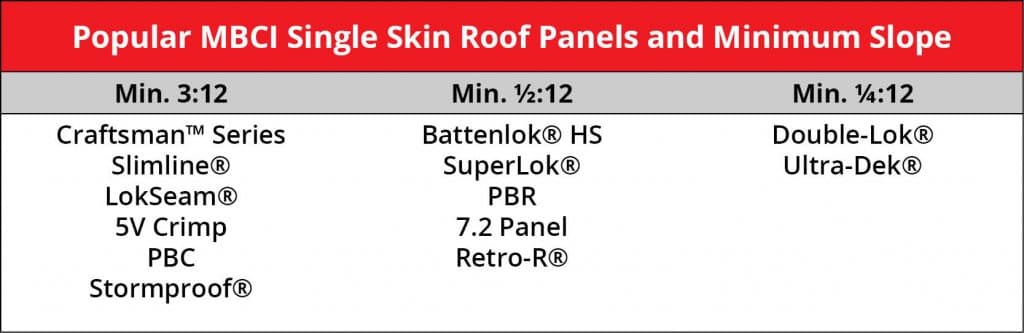
Depending on the roof profile, there are minimum roof slope requirements for each panel, which need to be considered. The profile refers to the shape the metal sheets take when they bend to form panels. Metal roof slope is expressed by a ratio indicating the roof pitch, which notes the vertical rise of the roof (in inches) for every 12 inches the roof runs horizontally—in other words, dividing the vertical rise and its horizontal span. The most common slopes are: 3:12, 1/2:12 and 1/4:12. When looking at metal roofing panel, you will need to consult with the manufacturer to ensure that the metal panel you selected will work for your application.

MBCI Roof Panels and Minimum Slopes

Applications: Low Slope or Steep Slope

Commercial Application– Low Slope Roofs

A low-slope roof is one whose slope is less than 3:12. Low slope roofs have several benefits. They have simpler geometry that is often much less expensive to construct and low slope metal roofs require fewer materials than a steep slope, which reduce material costs. Metal roofing panels are excellent solutions for roofs with low slopes. Commercial roofs are typically low slope (less than a 3:12 slope), and larger than residential roofs. This is due to low slope metal roofs being a bit easier to build on large structures.

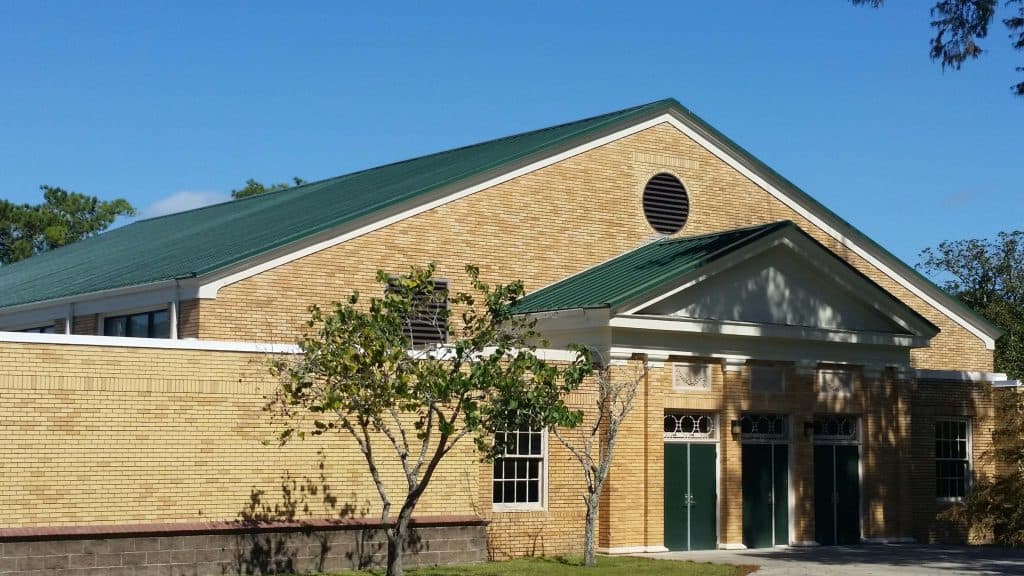
1/2:12 Metal Roof Slope
Cecilia Junior High in Cecilia, Louisiana uses 7,180 sq. ft. of MBCI’s SuperLok®. This panel requires a minimum slope of 1/2:12.
Residential Application– Steep Slope Roofs

A steep slope roof is one whose slope is greater than 3:12. Steeper slopes are ideal for areas that have higher snow loads and will also prevent the possibility of ponding water on the roof. When it comes to residential construction, your roof is a visible part of the structure. Choosing a metal roof for residential construction involves choosing a panel profile that will be aesthetically pleasing.

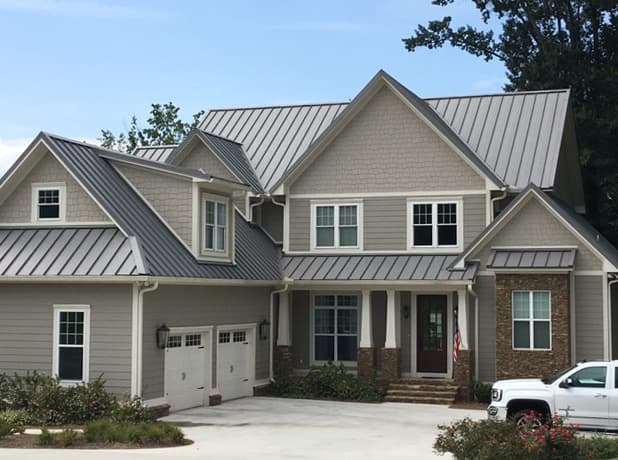
Steel Slope Metal Roof
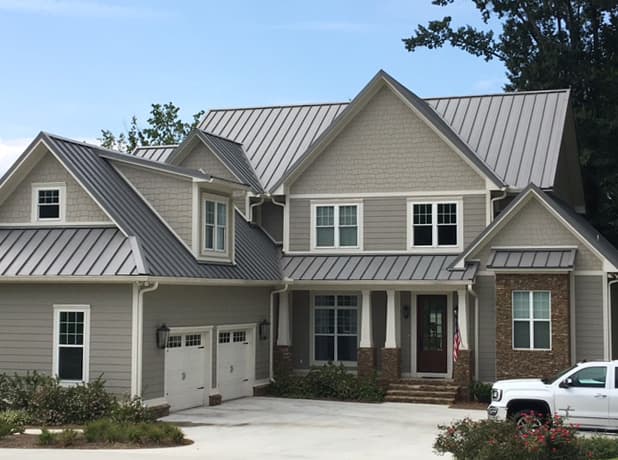
It is common to use steep slopes in residential applications, such as this home in Guntersville, Alabama that utilizes MBCI’s LokSeam® (requiring a minimum slope of 3:12).

Conclusion

Regardless of whether you’re choosing metal panels for a commercial or residential structure, slope matters. Following common standards, doing your research and paying attention to manufacturer guidelines regarding minimum slope will ensure you’re reaping the full benefit of your metal panel selection.

For More Information

To learn more about metal roof slopes, check out:

A Storehouse of Storage Solutions

With more than an estimated 54,000 storage units spread across the U.S. in 2015, according to IBISWorld, and 2.63 billion square feet of existing rentable self-storage space in 2014, the self-storage industry is booming. In fact, U.S. storage facility revenue topped off at an estimated $29.8 billion in 2014, rising to $31 billion in 2015 and is expected to reach $32.7 billion in 2016. In this growing market, storage builders and facility owners face increased competition and must build and maintain more efficiently and effectively than ever. Metal panels can be a differentiator for this market, especially through multi-story and climate controlled storage facilities.

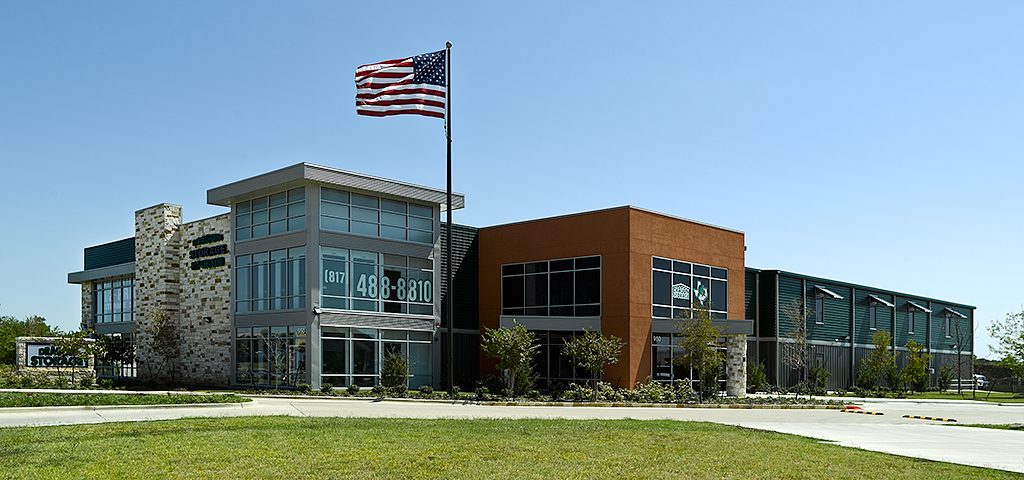
MBCI Self Storage
Southlake Self Storage in Weatherford, Tex. is a multi-story storage facility utilizing MBCI’s PBU, PBD and PBR metal panels.

Maximizing Sustainable, Rentable Space

Among the cladding and roofing materials available to build these specialized facilities, insulated metal panels (IMPs) are highly energy efficient, deliver a full weather barrier and can be designed without exterior wall framing. This boosts rentable square footage by eliminating exterior wall framing typically built with studs, batt insulation, and liner panels.

Made from 90 percent closed foam, encapsulated inside of two metal panels and impervious to water, IMPs offer a high R-value, which is a big benefit for all storage types, particularly cold storage facilities. Steel panel facings create a vapor barrier and provide long-term thermal stability, virtually eliminating off-gassing found with rigid board insulation. IMPs give design professionals the opportunity to design functional, attractive, sustainable storage facilities, and facility owners the opportunity to lower construction, operating, energy consumption, and maintenance costs throughout the life span of a building.

As an all-in-one air solution—delivering an air, vapor and water barrier with continuous insulation—building teams can strip down the multiple trades to one single application. This means there are no gaps or voids to sap thermal value, and no degradation by air or moisture. Furthermore, IMPs are the most efficient product available, providing an R-value of 7 to 8 per inch vs. the 4.5 for batt insulation, essentially doubling performance. So not only do building teams come away with a thermally superior product, but the IMP storage facility will meet increasing continuous insulation code requirements, such as those mandated by ASHRAE 90.1.

Of course, increasing rentable square footage is one of the biggest draws about IMPs for building owners as those extra four to six inches on the perimeter go straight to the bottom line.

A Modern Style for Storage

Evolving from the standard-looking, plain boxes, today’s storage facilities are taking on a more architectural look to better blend into the office complexes, residential communities and retail complexes surrounding them.

With a variety of high-performance coatings, colors, reveal joints and corrugated sheets with assorted patterns, IMPs offer a large selection of design options to architects looking to create these more trendy designs.

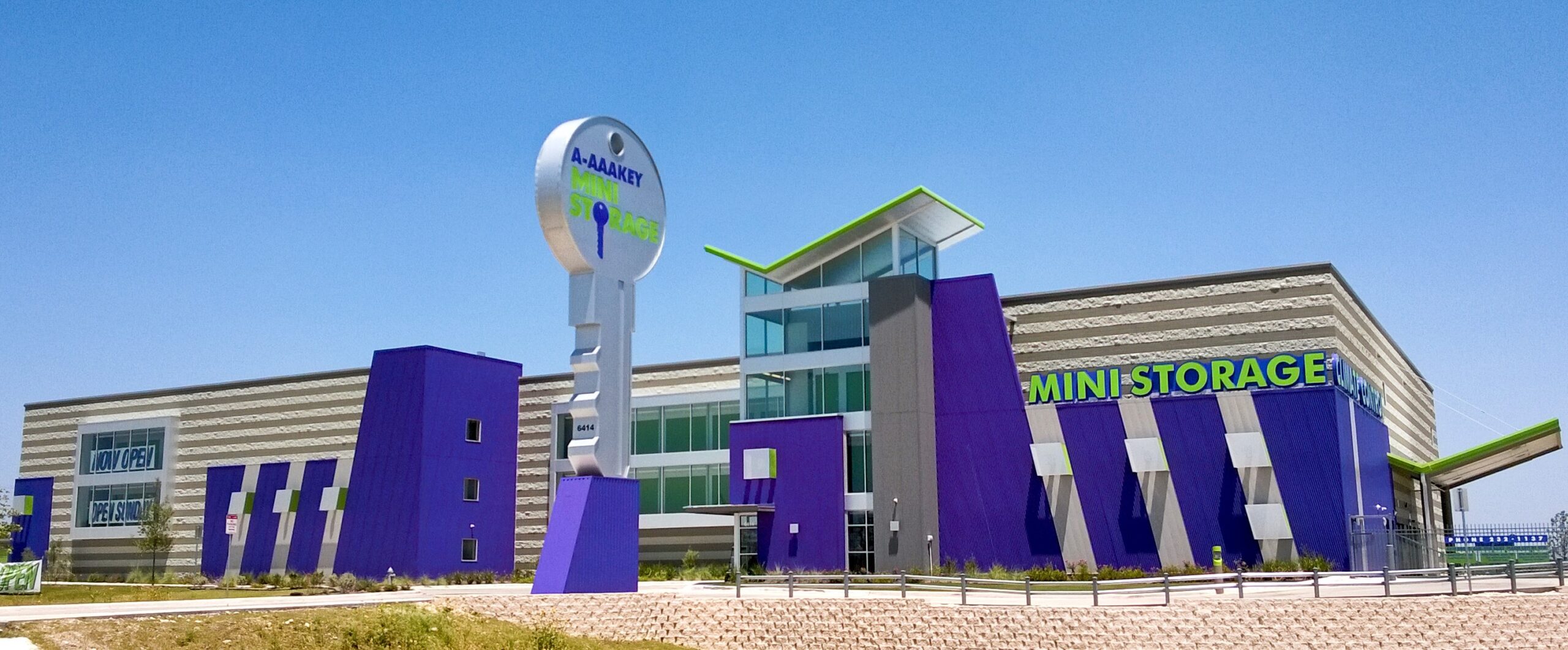
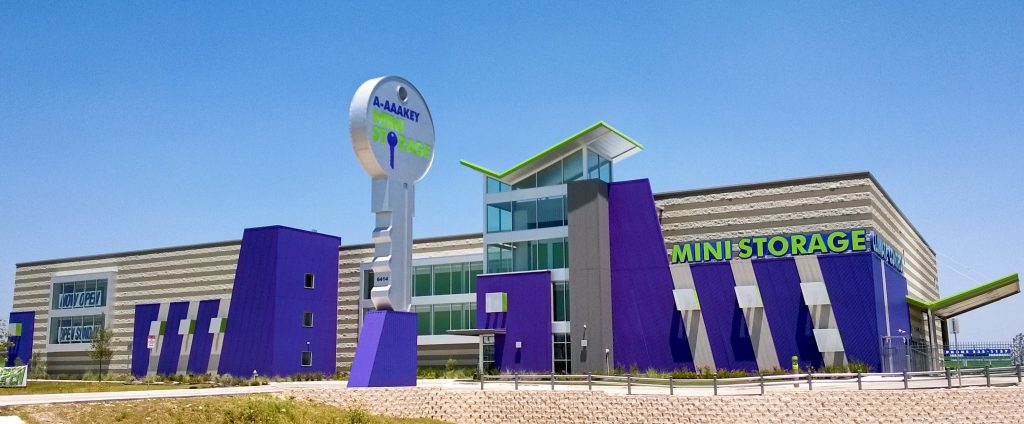
Metal Panels for Self-Storage Buildings
A-AAAKey Mini Storage in utilizes modern colors with 55,000 sq. ft. of MBCI’s Ultra-Dek® metal roof panels.

“The calculated use of smooth, concealed-fastener panels harkens to contemporary design styles with an eye toward the future,” states Ryan Rogers, managing partner, RHW Capital Management Group, Orange, Calif., in an Aug. 2016 issue of Inside Self-Storage. “This can create the perception of innovation and dynamism, communicating to customers that your facility is on the cutting edge of the industry and, as such, a successful leader.”

In order to capitalize on the design and performance options leveraged by IMP panels, architects are advised to integrate these systems from the project’s onset in order to maximize efficiencies and potentially take advantage of longer stands, greater distances and heavier steel gauges.

Multi-Level Storage Facilities

Moving forward, designers can expect to see an increase in multi-story storage facilities, particularly in urban areas, where building owners are being forced onto smaller lots.

Explaining the trend in a Sept. 2016 issue of Commercial Investment Real Estate magazine, Michael Haugh, CCIM, senior director of revenue management, Storage USA, Memphis, states, “Increased land costs have forced developers to build up, particularly in urban markets where land tracks of four or more acres necessary for single-story developments are nonexistent. In some cases, a multistory project can be built on as little as 1.5 acres.”

Or in regions where there is little space for new construction but a high demand for storage, like New York City, storage companies are renovating upward. For example, Stop & Stor partners with door and storage solution company, DBCI to convert existing buildings into high-end, multi-level storage facilities. Using existing building blueprints and outline unit placement, DBCI created a custom storage solution in a space that is both conveniently located and functional For more information, read “Urban Storage Units” in Metal Architecture’s Jan. 2016 issue.

Filling the Storage Niche

From multiple stories to designer-end architecture, IMPs are actively filling an important niche in the self-storage industry as a durable and aesthetic, all-in-one building enclosure solution.

Find a sales representative