Metal Roofs and Solar Energy: An Ideal Match

Everyone is talking about—and doing something about—sustainability. Metal roofs fit nicely into the sustainable-material equation because of their myriad traits, such as recyclability, reflectivity, longevity and durability.  Another major component in the sustainability equation is renewable energy—the production of energy from renewable resources like sun and wind.  A metal roof is the ideal location for solar energy production on homes, commercial buildings and recreational applications.

Why Solar Panels and Metal Roofs?
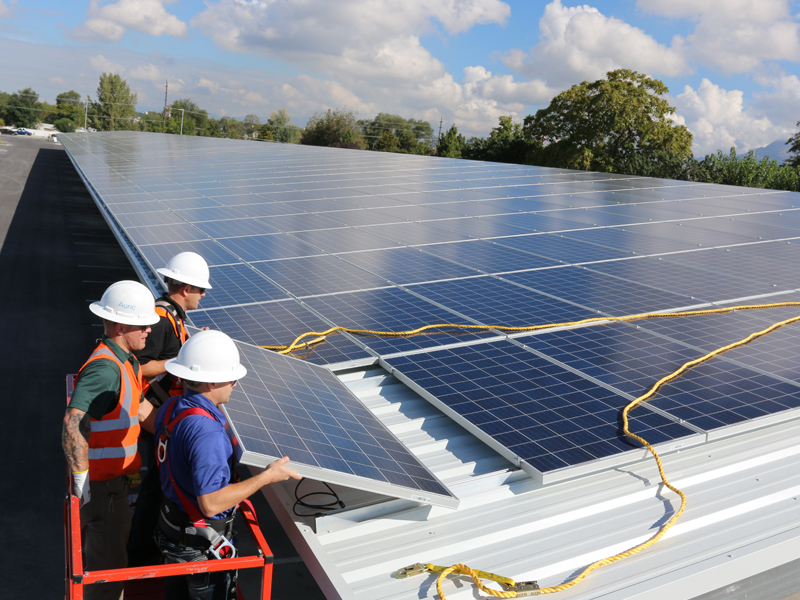
metal roofing and solar panels
One of the key factors for long-term success of rooftop solar energy is the quality of roof under the solar panels.  Roofs under photovoltaic (PV) systems should be durable and have an equivalent service life to the solar panels.  However, too many traditional roof systems do not have a service life that matches, let alone exceeds, the service life of the PV panels.  This is where metal roofs excel.

Service Life of Metal Roofs

A study of roof system longevity presented at the Fourth International Symposium on Roofing Technology by Carl Cash, a principle at Simpson Gumpertz & Heger, showed that metal panel roofs have the longest service life when compared to asphalt-based roofs and single ply roofs.   The study showed that the average life of metal panels is 25 years.  BUR and EPDM were second and third, respectively, at 16.6 and 14.1 years of average service life.  Exceeding the Cash study, a more recent study conducted by the Metal Construction Association (MCA) and Zinc Aluminum Coaters (ZAC) Association showed the longevity of low-slope unpainted 55% Al-Zn alloy coated steel standing seam roofing (SSR) systems is 60 years.

Service Life of Solar Panels

Solar panels will last 25 to 30 years.  In fact, some of the very first PV panels from the 1960s and 1970s are still producing energy.  While their efficiency might decrease over time, solar panels will make electricity for many decades.  For the most cost-effective rooftop solar energy installation, the longevity of the roof should be equivalent, or greater, than the solar panels so that the roof doesn’t need replacement during the life of the solar energy system.  Metal panels are the most reliable, long-term roofing system for solar energy installation projects.

Built to Last
Solar Metal Roof Panels
Solar Roof Panels on Real Salt Lake City Stadium

Simply put, installing solar energy on rooftops that don’t have an equivalent service life is a mistake, especially for solar projects that cover a large portion of the rooftop.  The cost of decommissioning, removing, and replacing rooftop solar energy can cost 20% to 100% of the original installed cost.  The cost tends to align with the percentage of rooftop covered with solar panels.  Much of the cost to remove and reinstall is labor, but an older solar energy system will likely need some new components—most likely new wiring—when reinstalled, also adding to the cost.

Rooftop solar installations continue to grow year over year.  And with the extension of the federal investment tax credit for five years, expect more solar energy installations on roofs.  Pair solar energy with a metal roof, and you’ve hit a sustainable “home run.”

Learn other ways to implement Net-Zero Energy strategies into your building and learn how MBCI’s products contribute.
Snow and Metal Panel Roofs: Part 2


In part I of this blog, we discussed what to consider when deciding the roof material and roof slope to build with in snowy conditions. If you have decided to design a roof with metal panels, it is important to use the correct panel seams, evaluate the roof layout and consider long-term weatherproofing, and ensure your roof design fits the needs and function of the building.

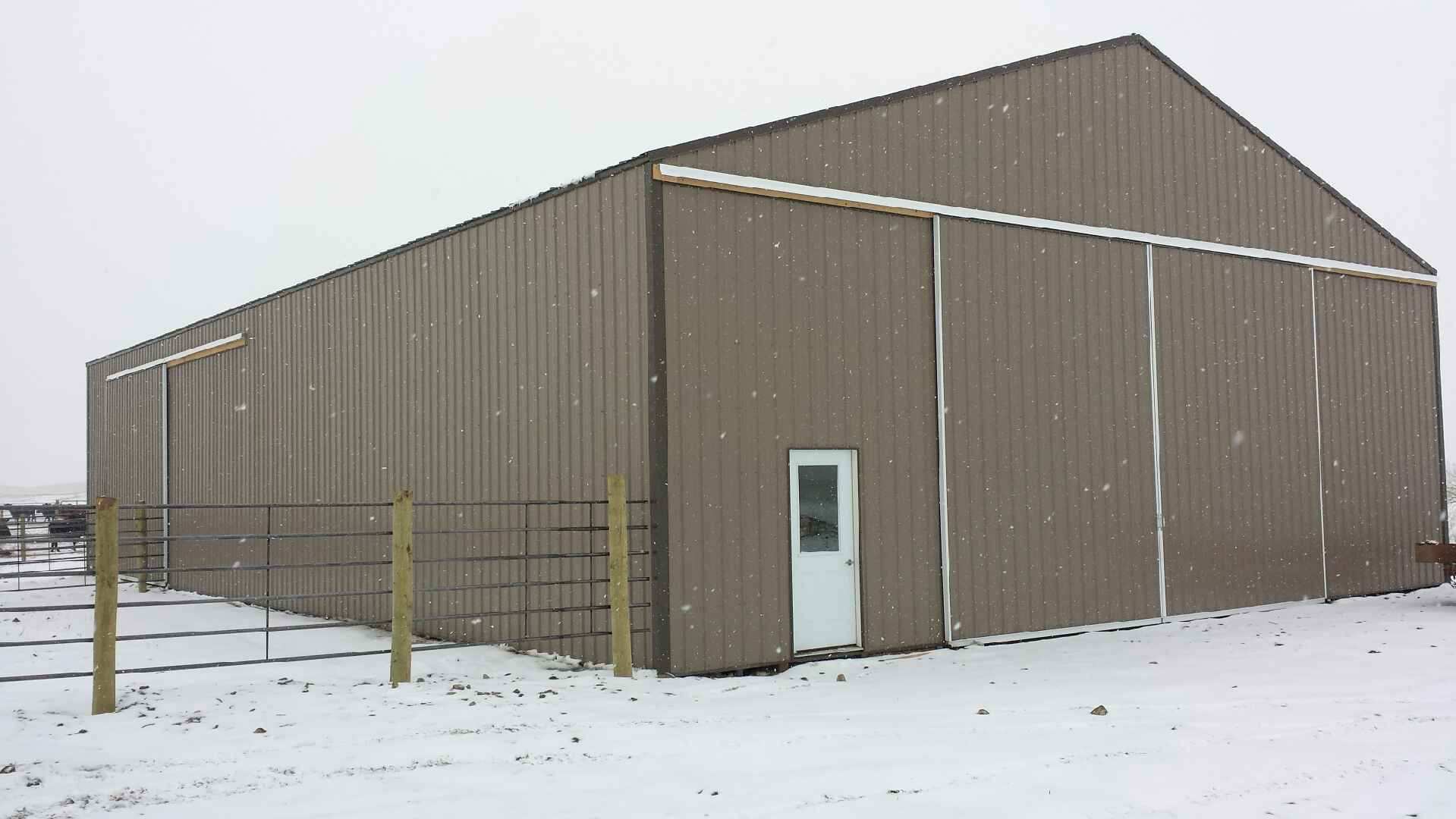
Metal Building in Snowy South Dakota

Weathertight Panel Seams

For metal panel roofs less than 3:12 (i.e., low-slope roofs), the panel seams should be watertight. A watertight seam resists water intrusion, so snow on a roof should not become a leakage issue. For metal panel roofs with slope greater than 3:12, the steeper slope means liquid water (e.g., rain) drains very quickly off the roof. Because of this, many seams used for steep-slope metal panels are not watertight. Non-watertight seams can be problematic where snow stays on a roof. Architects should consider using watertight seams (e.g., double lock) and highly water-resistant underlayments in snow areas for all roof slopes.

Roof Layout

A designer should also consider the layout of the roof. Valleys collect snow. Valleys in which one roof area is significantly larger than the other (e.g., a dormer extending from a large roof area) are vulnerable to unbalanced sliding snow. A large snow slide can move across the valley and literally tear open the standing seams and displace panels.

Drifting snow can occur behind HVAC units, at perimeter walls and behind rooftop solar thermal and PV panels. Where a roof transitions from a lower low-slope roof area to an upper steep-slope roof area, snow will collect. Consider the potential snow load and entrapped moisture at these locations; the transition detail becomes critical to long-term weatherproofing.  And, depending on the orientation (e.g., north facing), areas with drifted snow may not see much sunlight, so snow is more likely to stay on the roof for a longer time.

Building Function

As the roof designer, design the building and site to account for the roof’s function. Many designers turn to snow retention devices to keep snow on roofs, especially above pedestrian areas, such as entrances and outdoor seating areas, or adjacent buildings.   Some of these devices rely on adhesive attachment to the panel, which means they rely on the adhesion of the paint to the metal. But physical attachment—e.g., snow fences clamped to the standing seams—is always a more confident, long-term approach than adhesive attachment when it comes to resisting shear/sliding loads. Using.multiple rows of snow fences, sometimes double in height, may be needed in areas that get large and prolonged amounts of snow (e.g., ski resorts), or where the eave to valley length is long, or where the slope is very steep.  Each increases the shear loads.

Designing a Snow Retention System

Snow retention systems need to be engineered, not guesstimated! Use online models to assist with designing snow retention devices. Input your snow load, roof slope, panel width, roof length (measured horizontally), overall width of the roof area, and the manufacturer and panel type. These inputs are needed to adequately engineer a snow fence assembly.  And remember, the snow loads are transferred from the fence to the panel seams, then to the panel clips and to the deck/structure.  The entire load path needs to be designed to handle the snow load.  Here is one model: http://www.s-5.com/calculator/index.cfm

For more tips on designing a snow retention system, read “The Art of Properly Specifying Snow Retention Systems.”

Designing a metal roof for snow is a mix of logic, experience and engineering. We can design roofs in snow because of our everyday observations of roofs with snow on them. Stay observant; design well.

Geo-thermal House Heats and Cools Itself

Designed and owned by Raj and Asit Parikh, the “Zenesis House” is heated and cooled by an intricate geothermal system. It collects rainwater, heats or cools the water using a solar thermal system, and distributes the temperature-controlled water through pipes that run under the drive and walkways, as well as the floors and ceilings.

With this system in place, the Parikh’s enjoy on average $2-3 energy bills per month. The home features solar panels that were installed upon MBCI’s eco-FICIENT® Insulated BattenLok metal roof panels, and the walls are eco-FICIENT 7.2 panels. The insulated metal roof and wall panels feature concealed clips to provide continuous insulation and eliminate thermal bridges.

“The key with Zenesis House is we wanted to not buy a boiler, not buy an air conditioning system, not buy a hot water heater and do everything with the earth and sun,” Asit Parikh said [pix11.com].

Raj Parikh is a Principal of Metropolitan Building Consulting Group, PLLC, in New York City. The Zenesis House was constructed by their sister company, Zenesis Design Build in New Jersey.

Learn more about insulated metal panels and why solar panels and metal roofing are a perfect combination.

Watch the full video.

Wind Designs for Metal Roofs

One of the most important requirements for metal roof installation is ensuring that a roof stays in place when the wind blows.  The core concept is that the roof’s wind resistance needs to be greater than the wind loads acting on a building’s roof.  Wind resistance is most commonly determined by a physical test; wind loads are calculated.

Calculating Wind Loads

Wind loads are based on the design wind speed (which is based on the geographic location of the building), height of the roof, exposure category, roof type, enclosure classification and risk category.  The height of the roof, and exposure and risk categories are factors that are used to convert design wind speed to an uplift pressure.  Wind speed maps and the rules to calculate wind pressures are found in Section 1609, Wind Loads, in the 2012 or 2015 IBC.  The information is based on an engineering standard written by The American Society of Civil Engineers, “ASCE 7-10, Minimum Design Loads for Buildings and Other Structures.”Wind Uplift Testing_2

Defining Exposure Risk Category

Exposure categories relate to the characteristics of the ground, such as urban and suburban areas or open terrain with some obstructions or flat areas like open water.  There are 4 risk categories.  Category I is low risk to humans, such as agricultural facilities. Category III includes, for example, buildings for public assembly, colleges and universities, and water treatment facilities.  Category IV includes essential facilities like hospitals and police stations.  Category II is everything else—most roofs are Category II. A building shall be classified as enclosed, open or partially enclosed. The enclosure classification is used to determine the internal pressure coefficients used to calculate design roof pressures.

Determining Wind Pressures

Contractors should work with a structural engineer or the metal panel manufacturer to determine the wind pressures for each roofing project.  Wind pressures are determined for the field of the roof, the perimeters and the corners, where loads are largest.  Only after determining the design pressures can the appropriate metal panel roof system and attachment requirements be designed.

Testing Uplift Resistance

Physical tests are the most common method to determine uplift resistance.  Panel width and profile, metal type and thickness, clip type and frequency, type and number of fasteners, and the roof deck contribute to the uplift resistance of every metal panel roof system.  Metal panel roof systems installed over solid substrates (with concealed clips or through-fastened) can be designed using the following test standards: FM 4471, ASTM E 1592, UL 580, or UL 1897.  Metal panels installed over open framing can be designed using either ASTM E 1592 or FM 4471.  Manufacturers run these tests; uplift resistance data is available for most metal panel roof systems.  Installers can get this data directly from manufacturers or from web-based listing services provided by FM and UL.

Designing a Legal Metal Roof System

Wind loads and wind resistance information is necessary to verify code compliance.  Get it for every project you install!  Using systems that not only have been tested to the correct tests, but using systems that have uplift resistance greater than the design loads is key to a successful installation, and quite frankly, key to installing legal roof systems.

Passive Aggressive: Metal Buildings Suit Passive House Standards

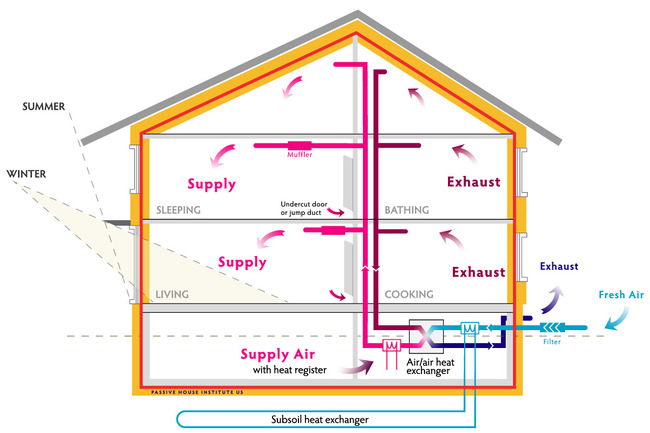
Today’s big push toward Passive House standards — the formerly German building certification that recently gave rise to a U.S. counterpart, Passive House Institute US, with its PHIUS+ certification — is also creating more interest in the highly efficient, highly insulated metal buildings. The projects range from metal-clad houses to IMP commercial facilities to the first Passive House high-rise in the world, Cornell University’s 26-story residence tower, clad in metal panels.

Metal? That’s right. While this surprises few design and construction professionals, consider these facts: (1) IMPs and metal roofs protect their insulation backup better than many kinds of construction methods, ensuring good long-term thermal resistance, or LTTR. (2) Passive House requires airtight construction with minimal air infiltration, which is ideal for the tight, engineered construction and inherent air barrier quality of metal panels. (3) Metal roofs and walls are available with high-efficiency Energy Star windows and skylights that are designed to integrate with the cladding and roofing systems.

Photo courtesy of www.phius.org

These reasons also explain why IMPs have been used extensively for net-zero energy buildings in recent years, which also demand highly energy-efficient enclosures along with the means to produce energy with solar heating, photovoltaics, geothermal and wind turbines.

So when it comes to Passive House and the PHIUS+ certification, often the choice of insulated metal panel (IMP) systems is among the first major project choices. Two immediate benefits arise, says the Metal Construction Association, for solar reflectance (SR) and thermal emittance (TE). “Metal cladding has very dependable and high SR and TE values, and it employs polyurethane foam, one of the most efficient types of insulation, which maximizes building energy efficiency,” says Ken Buchinger, general manager of Technical Services with MBCI.

Coupled with the robust barrier provided by coil metal and the tight construction afforded by pre-engineered, prefabricated panel systems, the resulting enclosure type is among the most efficient available. And that’s not just for new construction: A large number of Passive House projects have retrofitted IMPs over leaky existing buildings of masonry, brick or stucco. In its certification guide for PHIUS+, the Passive House Institute US specifically cites metal roofing and metal cladding systems to meet the rigorous criteria.

For the net-zero approach, Buchinger adds that solar photovoltaic systems and solar water heating systems can be installed on a metal roof, penetration-free, resulting in high performance with minimal risk. “Metal roofing, known to last 60 years or longer, is the only roof type that can outlive a PV system mounted on it, meaning zero maintenance and low in-place cost for the roof and PV system together,” he explains.

Whether the approach is passive or zero, we’re seeing a new generation of super-efficient buildings today. New certification rules were unveiled this year for the Passive House standard have lots of buzz. And the latest projects, many with metal wall and roof panels, have resulted in facilities using as little as 10% of the energy required for comparable projects, according to PHIUS.

That’s why passive design sounds pretty aggressive for going green.

Codes: More than the IBC and IRC

IBC IRC CodeWe all know to look to IBC Chapter 15 and IRC Chapter 9 for information about roof systems.  These two “Roof Assemblies and Rooftop Structures” chapters include the requirements for fire, wind, impact, materials, and reroofing.  But did you know the scope of the building code (IBC Section 101.4) references additional model codes that are considered to be part of the requirements of the IBC?  From a roofing perspective, this scoping reference brings into play the International Energy Conservation Code (IECC) and the International Existing Building Code (IEBC).

The creators of the model codes are attempting to ensure that buildings (and roofs, in our case) are designed and built according to the most recent model codes even if they haven’t been specifically adopted by a state or local jurisdiction.  If a jurisdiction adopts and enforces the 2015 IBC, by reference the 2015 IECC and 2015 IEBC are in effect.

How do 2015 IECC and 2015 IEBC affect roofs?
The IECC Commercial Provisions include energy efficiency requirements for the same buildings for which IBC Chapter 15 roofing requirements are required.  The IECC includes minimum insulation, air barrier, and reflectivity requirements for building envelopes.  Prescriptive R-values and U-values are provided for roofs, and they are based on climate zone, metal buildings, and attics.  Minimum levels of solar reflectance and thermal emittance are required for low-slope roofs on buildings with air-conditioning in climate zones 1, 2 and 3.

Air barriers—used to reduce or eliminate air leakage—are required for new construction.  These are based on materials, systems, or the whole building.  Sheet steel and aluminum are listed as materials that meet the air barrier requirements.  Of course, the joints and seams are critical to the effectiveness of metal roofing panels when considered to be air barriers.  When reroofing, air barrier requirements are not triggered, which is significant.  But the insulation requirements are triggered.

Roofing and structural considerations
The 2015 IEBC includes sections about reroofing (Section 706, which is new in the 2015 IEBC) and structural considerations (Section 707).  The IEBC divides “Alterations” of buildings into three types: Levels I, II and III.  A level I alteration includes the removal and replacement of existing materials.  Reroofing is a level I alteration, which triggers the requirements of Chapter 7.  The Structural section includes a requirement to upgrade a wind-resisting roof diaphragm when more than 50 percent of the roof is removed where the design wind speed is greater than 115 mph, and in special wind zones.  While these are small portions of the United States, it’s important to understand this requirement.

Build roofs with the full scope in mind
Look beyond the roofing chapters to ensure that you design and build buildings according to the most recent building codes.

Ventilation for Steep-Slope Roofs

Ventilation

Ventilation can be a confusing topic.  What is the purpose of ventilation?  Is ventilation required for all types of roofs?  What do the model codes require?

What is Ventilation?

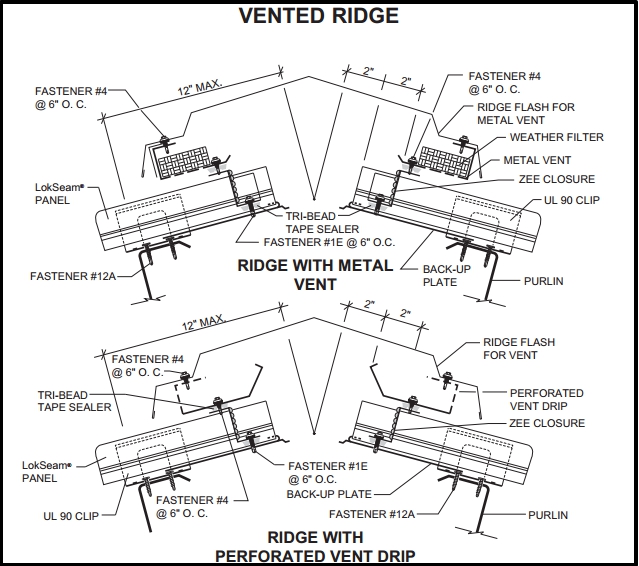
Ventilation, when done properly, removes heat and moisture from traditional attics and from rafter spaces.  The removal of heat and moisture is necessary for buildings to operate efficiently and not deteriorate prematurely.  Ideally, an attic should be the same temperature and have the same humidity level as the exterior.  Convective ventilation—natural air flow from eave to ridge—means air comes in at the eaves and is exhausted at the ridge, taking the heat and moisture with it.  Importantly, ventilation is outboard of the insulation layer for the home or building.

Ventilation Requirements

The IRC and IBC have very similar requirements, found in the 2015 IBC, Section 1203 and the 2015 IRC, Section R806.  Ventilation is not tied to the type of roof system installed, as some believe.  Because ventilation improves the overall performance of a building, regardless of roof type, ventilation is required when steep-slope metal roofs are installed.

The amount of ventilation is based on the floor area of the attic.  The ventilating area should be at least 1/150 of the floor area.  Ventilation amounts can be reduced to 1/300 if half of the ventilation is at the eave and half at the ridge.  This allows the convective flow to work efficiently, allowing the reduction in the total ventilation amount.  In climate zones 6, 7, and 8 (i.e., the northern third of the US), an air barrier is required at the ceiling level in order to use the reduced amount of ventilation (i.e., 1/300).  A vapor retarder reduces the amount of moisture that can accumulate in the attic space; therefore, less ventilation is needed and required.

Because the model codes discuss ventilation only for attics and enclosed rafter spaces, the requirements are necessary only for steep-slope roofs.  Low-slope roof systems are not installed over attics or cathedral ceilings; therefore, the requirements for ventilation aren’t triggered when a low-slope roof is installed. Not because of the low-slope roof, but because there isn’t an attic or a cathedral ceiling.

Is ventilation in your scope of work?  In nearly all situations, the metal panel installer will install the ventilation components at the ridge.  And, unless the ventilation at the eave can remain in place, the installer should take the opportunity to install the ventilation components at the eave.  Eave ventilation can easily be made of metal, and can be an “add” to your scope of work for new and replacement roofs.

Understand ventilation requirements, improve long-term performance, and expand your scope of work.

Part III – Transparency Plus Consensus: A Win-Win for Everyone

Part III transparency plus consensusIt has been a long time since my last blog on this subject. This is not only because I’ve been busy but also because the landscape of green building programs in general has changed significantly since Part II, and I wanted to wait to see how things shook out before I wrote something that might be immediately outdated. If you remember, we left off in Part II talking about how LEED, the most popular green building program in the US, has not been developed through an ANSI accredited consensus process. Furthermore, the resulting lack of transparency was dubiously ironic given that LEED demands a high level of transparency from building product manufacturers min the latest version of their program, LEED v4.

We also discussed the related but more general movement for manufacturers to fully disclose all of the ingredients in their products to a third party who then compares that list to lists of known hazardous substances and disclose any matches on a product label or public disclosure for all to see. This movement has been fueled by several large architecture firms sending letters to building product manufacturers threatening to stop specifying their products unless they participate. Although most manufactures agree that there is merit to disclosure and are anxious to participate in a fair program, they have not been privy to discussions regarding the logistics of such a program nor have they been allowed to participate in any kind of a standard development governing the disclosure process. This makes manufacturers reluctant to participate, given their vulnerability in such a situation. This risk is leveraged by the fact that currently the only standards that dictate the rules of such a program are under the control of consortiums who have little to no scientific expertise and, frankly, have not been friendly to the building products industry in the past.

I also mentioned that there are alternative programs to LEED that have been developed through a valid consensus process. Specifically, the International Green Construction Code (IgCC), ASHRAE 189.1 and Green Building Assessment Protocol for Commercial Buildings (also known as Green Globes) are ANSI standards that outline the relevant requirements for anyone to view. However, the USGBC marketing machine and resulting popularity of LEED prevented wide use of these standards. Thus, they remained largely unutilized. That is until this year, when the USGBC, IgCC and ASHRAE signed a Memorandum of Understanding, promising to work together and create a favorable consensus by eliminating duplication of provisions and assigning an area of responsibility for each group to maintain separately.

Although no documents have yet to be created, it appears that the administration and enforcement provisions of the new standard will come from the IgCC, and the technical content will come from ASHRAE 189.1, both of which are consensus based. Meanwhile, LEED will require compliance with 189.1 as a prerequisite to an upcoming interim version of LEED. This approach allows an Authority Having Jurisdiction (AHJ) to adopt the IgCC as a minimum standard of construction; dropping any reference to LEED they might currently have as minimum project requirements for all buildings. This leaves LEED to evolve as a completely voluntary program going forward and push the envelope of green building, which is their core mission. Meanwhile, Green Globes remains ANSI accredited and still exists as a commercial competitor to LEED. This environment should result in a more user friendly application process, the lack of which been a ubiquitous criticism of LEED for years, because Green Globes is much more user-oriented.

So, it appears that the most popular green building programs are poised to move in the
direction of a true consensus, which is fantastic news for everyone involved. However, the creation and development of disclosure programs, which will not be in the initial technical requirements provided by ASHRAE 189.1, remains largely a one-sided affair with no seat for manufacturers at the table. Besides the contentious nature of the subject in general, there are major philosophical questions that have to be addressed before Health Product Declarations (HPDs), or any type of disclosure in general, can be brought into the main stream. That subject is beyond the scope of this blog, but I encourage you to read a very good article on the trappings of HPDs called “Disclosure: The Newest Dimension of Green Building” by Jim Hoff.

The good news is that there may be a viable alternative to HPDs on the horizon. ASTM has a current open work item to develop a true consensus based standard guiding the issuance of a Product Transparency Declaration (PTD), which has much the same intent as an HPD. As discussed in Part I, the development of ASTM standards is a highly transparent process that allows everyone, including manufacturers, to come to the table. I encourage every designer to join ASTM and get involved in this process, especially those firms who participated in the letter writing campaign, and forgo HPDs until PTDs are available.

Yes, it will take a little longer; the reality that the development of consensus based standards takes time. But just like the development of the laws that govern this country, there is far too much risk involved in getting it wrong. Instead, having these standards developed by a consensus-based process is the only way the finished product will be truly useful and meaningful.

Demand for Roofing: Something to be Happy About

DSC00994

With the economic troubles of Greece and now China filling our news feeds, it’s nice to come across good news.  And let’s face it—over the last several years, particularly since 2009, there hasn’t been a whole lot of good news for roofers or the construction industry overall.

Recession Effects & A Positive Outlook

Roofing demand fell between 2009 and 2014 as nonresidential building construction spending and residential reroofing activity declined due to the recession, according to an article recently published on Building-Products.com. But this same article says U.S. demand for roofing is projected to rise 3.9 percent annually to 252 million squares in 2019, valued at $21.4 billion, according to a new Freedonia Group study.

Metal Roofing Outlook

In particular, metal roofing will see above-average demand gains through 2019. The article goes on to say metal roofing demand will be helped by its durability and ability to support solar panels used to generate electricity.  Building Products also sites metal roofing systems provide additional insulation as a boost to energy savings.

New building construction activity is expected to account for increased demand for roofing through 2019. New non-residential demand will come in the areas of office and commercial construction. Demand in the institutional and industrial segments will also increase as more schools, hospitals and manufacturing sites are built, correlating to an increased demand for such low slope products as metal roofing.

Best Applications for Water Barrier Standing Seam Metal Roof Panels

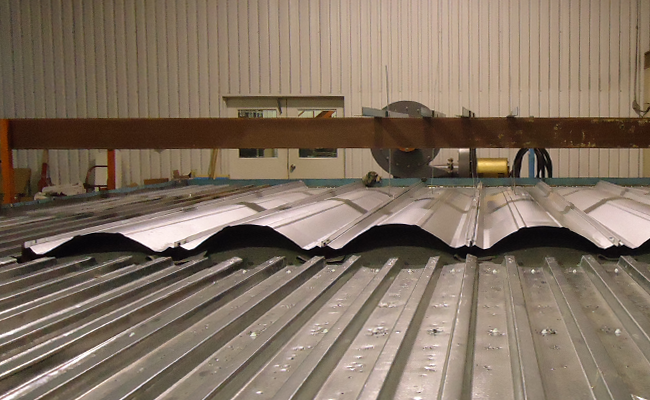
We discussed water shedding standing seam metal roofs in my last post, and the fact that despite their water shedding properties, you still really must guard against water infiltration. Today I’ll discuss water barrier roof systems, which are structural standing seam roofing systems. These panels can withstand temporary water immersion over the panel seams and end laps. They normally have factory applied mastic in the seams to insure weather integrity. End laps, when needed, are installed using high quality tape and/or bead sealant supplied by the manufacturer. The trim designs used with these systems are much more water resistant as well.Water barrier SSR

The advantage these water barrier SSRS systems offer:

  • They require no deck. This is a tremendous savings on the in-place roof cost.
  • Many systems can be installed on roof slopes as low as ¼:12. This allows greater design flexibility and can also save on the in-place roof cost.
  • Because they are the only thing between the interior of a building and the weather, these are the most tested metal roof systems available. Manufacturers spend a lot of time and money testing these systems for air and water intrusion, dead load, wind uplift and fire.

Water barrier SSRSs can be further divided by seam type—trapezoidal or vertical rib.

Trapezoidal systems usually have a rib height of 3 inches. The most common panel width is 24 inches, although some manufacturers offer them in other widths as well. Trapezoidal systems are traditionally thought of as commercial or industrial standing seam systems. They are used on warehouses, factories and buildings where the roof is not meant to be seen from the ground. However, some designers have taken these systems and incorporated them into architectural applications with stunning results.

But be careful. Trapezoidal rib systems are much harder to seal at hips and valleys than vertical rib systems. The outside closures at the hip must be cut on a compound bevel with a trapezoidal system. At a valley, the panels are harder to seal because they require an inside closure; the vertical rib panels do not.

Vertical rib systems have traditionally been thought of as non-structural. However, there are now many vertical rib systems available that can span purlins or joists. These systems are available in a wide variety of panel widths, ranging from as little as 10 inches to as much as 18 inches wide. Rib heights vary from 1 foot to 3 feet.

Vertical rib systems are usually easier to install than the trapezoidals. There are fewer parts to the typical vertical seam system, which makes for a simpler, quicker installation. Because there are no inside closures, valleys are much easier to seal and quicker to install. Hips are easier to seal because the outside closures can be cut quickly and simply from a stock length of zee closure.

For these reasons, the vertical rib systems are often a better choice for applications on high-end architectural roofs. Ask just about any metal roof installer, and he will tell you that he prefers the vertical rib system over the trapezoidal system in this application.

Bottom line, when selecting a roof system, choose function first, then aesthetics.  When you use the wrong roof system for a given function, the installation process becomes complicated, and results less than ideal. With so many great metal roof options, don’t make life more complicated and uncertain than it need be.

And to make things simple, safe and sound, choose from MBCI’s array of metal roofing system products. Find out more.

Find a sales representative