

Category: News
Looking Ahead: 2022 Trends at a Glance

Why Upgrade a Roof to Metal Panels?
5 Retrofit Metal Roofing Systems
Market Update: January 2022
Cornerstone Building Brands Announces Acquisition of Union Corrugating Company

Steep Slope Metal Panel Roof Retrofitting Over An Existing Low-Slope Roof: Part 1
Planning for Metal Roof Retrofitting
What Sets MBCI Apart
Building. Relationships. The MBCI Difference.
The core of what we do at MBCI seems straightforward. As 32-year MBCI veteran Bruce Green put it, “We buy coiled steel and roll form it into metal building components for the construction industry.” While that is the core of what MBCI does, it isn’t the essence of who we are. Roll forming is simple. The MBCI secret is more complex: We don’t just build. We build relationships.
“It’s not about selling that project,” says Green, “It’s about developing the relationship, being there to help educate about trends, different codes or ways that you can do this better, faster and more efficiently.”
The Start of Something Beautiful
Imagine you’ve launched a metal building company. You have your engineering department and a source for structural parts, but you need everything else. It’s a real puzzle. At this point, an MBCI representative like Green would introduce themselves and get to know you and your vision. Whether it’s box buildings, mini storage, large, complicated, high-end warehouses, or anything in-between, your representative would work with you to bring your vision into fruition by forecasting week-by-week sales, nailing down the supply chain specifics and conceiving a plan to make it all possible. “That’s how we built the business. Taking care of contractors,” says Green.
And that’s just the beginning of your relationship. Your MBCI representative takes the time to understand not just your immediate goals, but your long-term vision – not just what your business is but what it could be. Because as an MBCI partner, your business can become so much more.
How? Because MBCI backs up our relationship with the largest, fastest, most diverse and most reliable nationwide network of metal component manufacturers.
Thinking Bigger
MBCI operates plants all over the United States. That means your business – which may have initially been imagined as a local company – has the distribution network in place to expand nationwide, while maintaining the schedules, delivery expectations and quality MBCI has built its reputation on. “Nobody has as many plants across the nation,” says Green. “No one has a more extensive product line. No one can deliver metal building components as efficiently and consistently as we can. That’s the way we built it.”
Key Relationships
MBCI’s reach stretches from coast to coast, but that great reach always includes touch points close at hand. Your primary touch point is your regional district manager. This is the supply chain expert who works with you to build the machine of your business and keep it running smoothly. It’s also the person to call on if any issues or complications arise. Rest assured knowing you have a direct connection to a real human who is dead set on making it right.
Once the program is created, you’ll have another touch point – the customer service representative. This is your day-to-day operations person with whom you place orders and determine specifics like delivery dates and locations.
Service Suited to You
Ordering and delivering material is just the bare bones of the business. The real meat is in the relationship – one that’s tailor-made to fit whatever level of service you need. If you prefer to send in a simple list of what you need, we’ll make it happen. But many clients want something more, and we’re happy to provide that. Green says, “If you called me right now wanting a complete metal building delivered to your address, knocked down and ready to set it up, I can make that happen. Or if you only need a portion of it – whatever you need, we can take care of.”
The service doesn’t end with your project, either. If you discover a leak or a problem with the building, MBCI will send out a specialist to walk the site, figure it out and help rectify it. In addition, we have people to answer your tax questions. We have a technical desk for questions. We even offer professional continuing education courses on topics like metal roofs, warranties and weather tightness. In short, we want to be your trusted resource for every aspect of the process.
MBCI is behind you every step of the way – even in catastrophic conditions. In fact, we operate a hurricane test chamber in Houston where MBCI buildings and components are subjected to hurricane-force winds to identify failure points. Based on the results, clips or fastener attachments are tweaked, or the panel shape is modified depending on where and how the failure occurred. This rigorous testing ensures MBCI products meet all new building codes.
Driving Changes
Sometimes codes aren’t what drive changes. As Green explains, “Some of it is driven by aesthetics. You might get into a municipality where they say, ‘We don’t want that typical metal building look in our town.’ So, we come up with a different wall panel.” We’ve done it before and we’re not afraid to tackle it again. That’s what it means to be a partner in the business.
Green sums it up nicely: “When I started out, I was dealing with a guy, and then he retired. Then I dealt with his son. Now he’s retired and I’m dealing with his son. It’s all about the relationship.” We believe long-term, genuine relationships like these are the foundation of good business. It’s might be easy to get distracted by flashy promises or fleeting trends, but at MBCI, we like to think not only how we can help you succeed right now – but how we can help you succeed for generations to come.
To begin experiencing the MBCI difference, contact a sales representative today.
Protecting Metal Panels from Rust
One of the many benefits of metal panels that contributes to their strengths is the fact that there are so many rust-resistant coating options with different levels of protection, making them a great option for virtually any environment or any budget. That said, though, missteps during storage, as well as during and after installation, can leave you with unwanted corrosion, i.e. rust. Factors such as improper storage, improper cutting, or other elements the metal might come in contact with can wreak havoc that are beyond the manufacturer’s control.
Regardless of the finish you have—painted, unpainted, high-end coatings or standard coatings—here are some simple installation and care instructions that can help further maintain the longevity of your metal panel product.
Preventing Rust When Materials Are Delivered
Proper material delivery/site storage is the first step to preventing rust. Be certain to check your panels while uncrating after storage on site for any early signs of corrosion, such as black discoloration or white rust/residue on them. This is a sure sign that that panel has been improperly stored and water has not been able to properly evacuate the panel bundles. Do not install any panel on which this has occurred, as the panel finish has most likely been compromised due to improper storage. If you go ahead and install it, that panel is going to continue to corrode and eventually lead to further rust/corrosion.
Make sure that you’re not trapping any sort of moisture in between the metal panels or restricting them from being able to drain when stored on site. Although the panel itself is corrosion-resistant, if you subject it to repeated and significant water being trapped in between the sheets by either not storing the material out of the mud and ground water, or if you’re not sloping the material bundles in such a manner that they can drain, then the result can yield “wet storage stains.” Therefore, if you want to prevent any sort of damage due to improper site storage, you must make sure that the panel is able to drain while stored and, if possible, tarp to resist heavy moisture concentrations such as snow and ice during inclement weather if necessary.
Preventing Rust During Installation
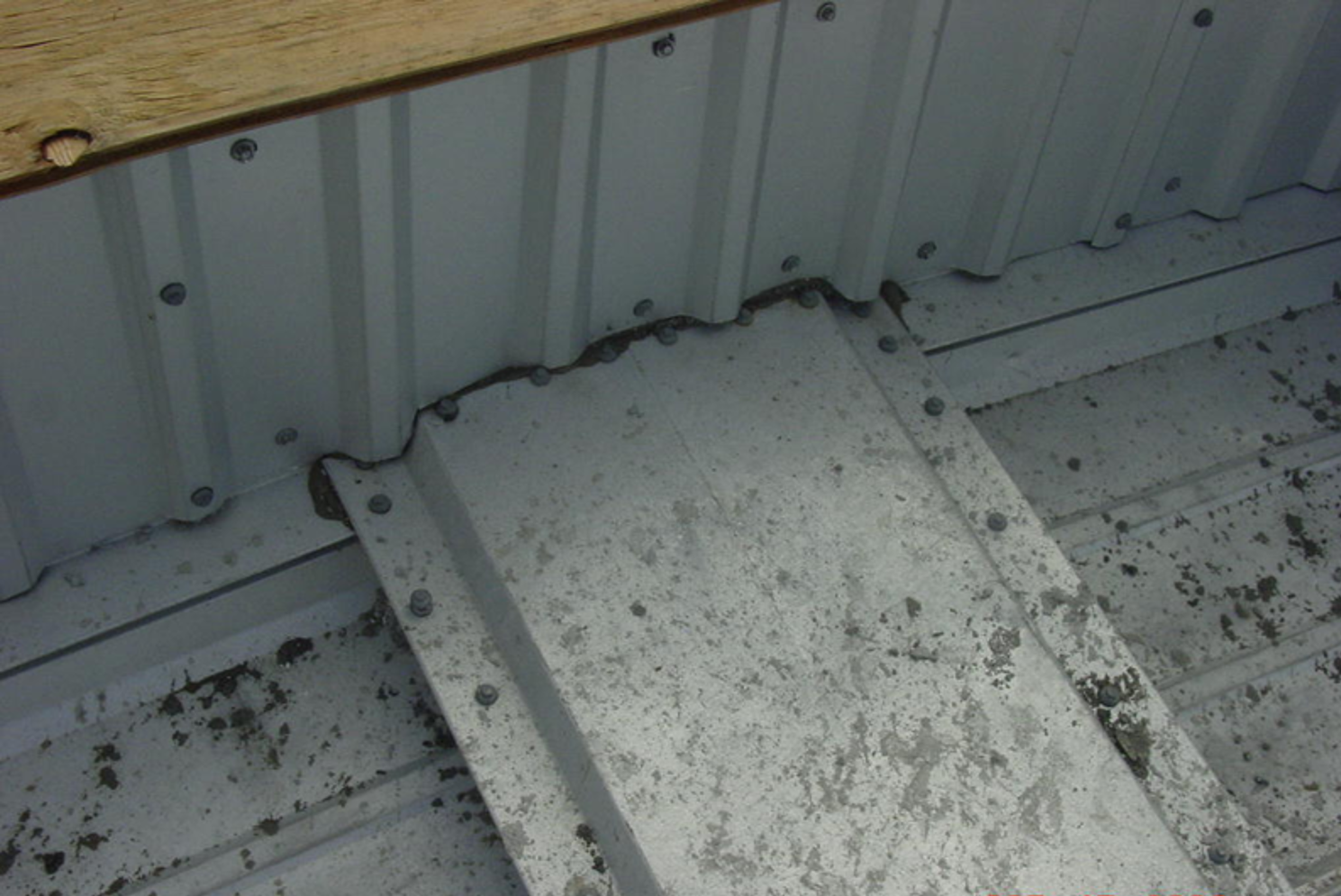
Next, let’s look at some installation no-no’s that WILL most definitely eventually lead to rust—and things to avoid. The first is the accumulation of drill shavings. Whether it’s a roof panel or a wall panel, when you’re installing the screws, even if you’re pre-drilling for the screws, you’re going to generate metal shavings. If those metal shavings are not removed and left to sit or cling to the sheeting those shavings will rust and will stain the roof or wall sheets. The shavings are uncoated/raw metal with no corrosion protection that can and will rust quickly. Eventually, the shavings may wash off or be blown off the roof or wall, but might not be until after they’ve stained the sheeting, thus leaving you with an issue to remedy and, since the “culprit” is gone, questioning if it’s just a stain or something more serious.
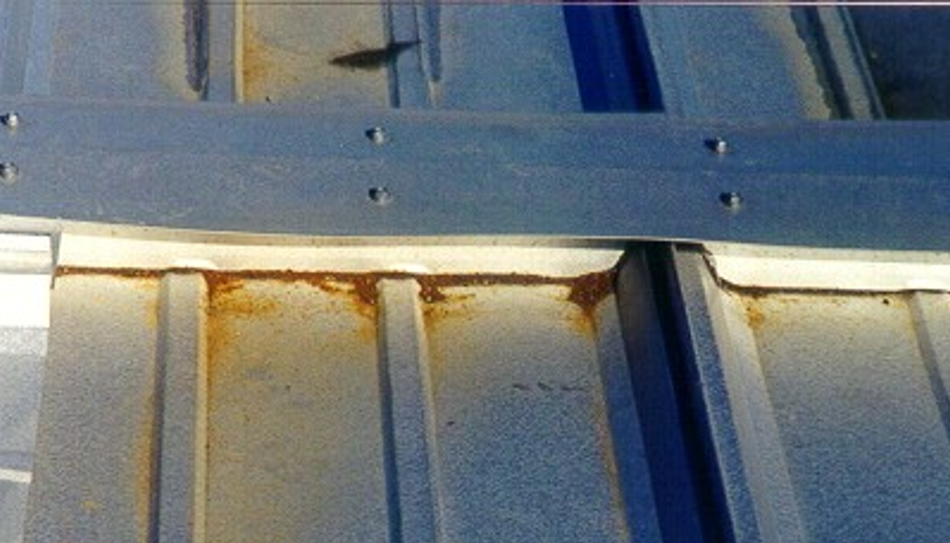
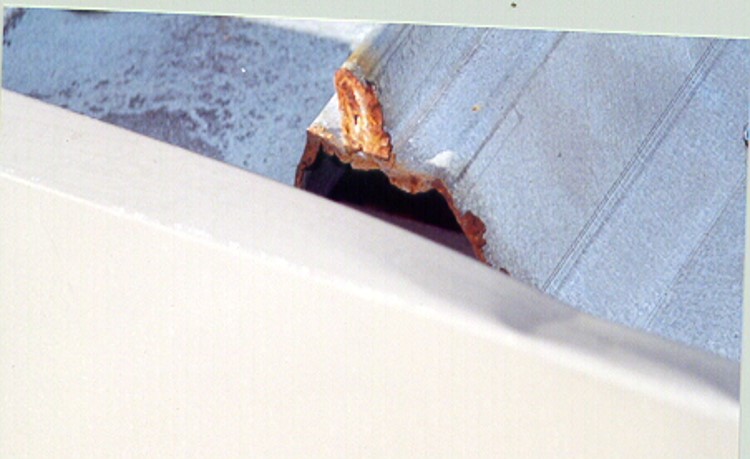
Remove the shavings as soon as you can to mitigate this issue. Additionally, if you’re going to do any field cutting, you need to do so via a shearing process utilizing the proper tools, such as electric nibblers, hand snips or electric shears. Any other type of cutting can cause the edge of the base material to become exposed and no longer protected by the Galvalume and painted coatings as they become disrupted. Using tools such as a “hot” saw, abrasive blades or even a reciprocating saw leads to a tearing motion rather than shearing motion, which will strip the metal of that protective coating; over time it can start to rust.
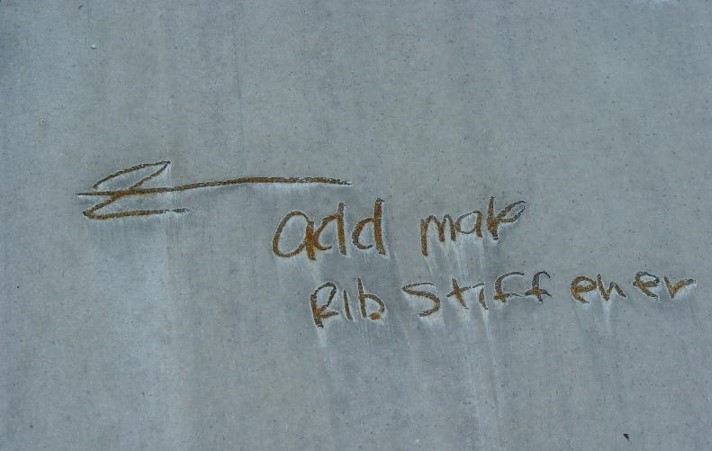
Graphite is another corrosive element that should be avoided as it is not a friend to Galvalume metals. Therefore, stay away from writing on your Galvalume material with pencils because over time the graphite will react, break down that protective layer, and lead to corrosion. If you do write on the panels with a pencil, make sure you clean it off. The best solution is to use permanent markers/Sharpies or dry erase markers.
Watch out for overspray from any adjacent wall coatings or finish systems like Stucco or similar masonry products, which can also damage panels if not removed promptly. And be certain not to rest the base of any metal panel in direct contact with material that is corrosive, such as concrete, or in such a manner that water can become trapped behind the panel and not able to drain. Industry recommendation is to maintain an eighth of an inch to a quarter-inch gap at the base of all your wall panels for not only expansion/contraction but for proper drainage and to prevent contact with dissimilar/corrosive materials.
Preventing Rust After Installation
Although Galvalume—whether bare or painted—is highly corrosive-resistant by nature, it too has its Kryptonite. Post-installation, the most important thing is to make sure you’re not adding something to the roof that’s going to react chemically/negatively with the Galvalume finish/coatings. For instance, many people don’t recognize that if they have mechanical units on a roof, the condensation that comes out of those mechanical units, when deposited directly onto a Galvalume panel over time, will lead to corrosion and rust. This condensate should either be filtered before exited onto the roof panel or drained via piping and not directly onto the sheeting.
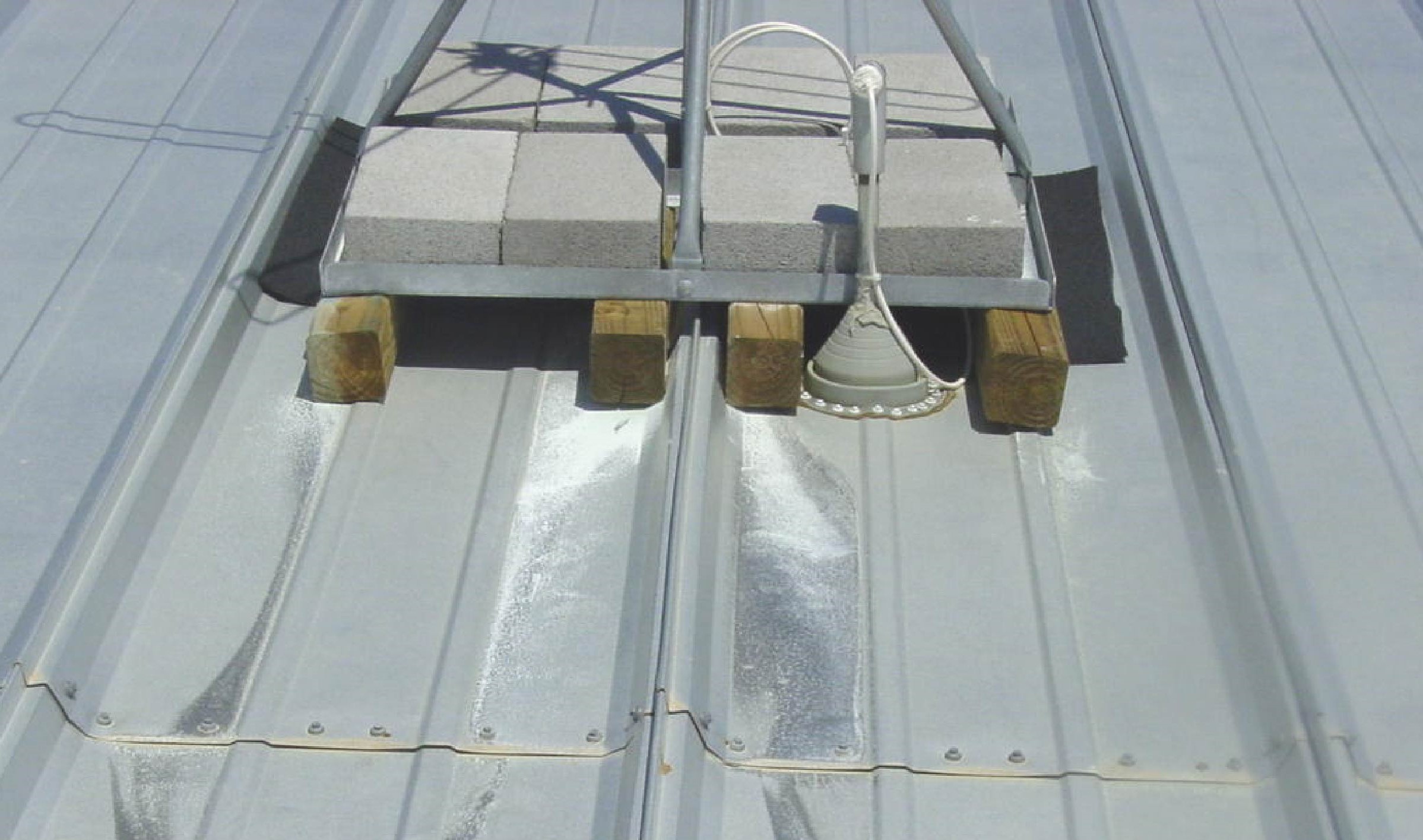
Contact with dissimilar metals, whether it be via incorrect type or method attachment from metal signage, solar panels and snow retention can be another major factor in post-installation corrosion. Panels must not come in contact with or be exposed to the runoff from the following metals: copper (lightning arrest systems, flashing, roof jacks, HVAC drainage); lead (roof jacks, pipe flashing); iron (pipes or soil); and, as previously noted, metal shavings.
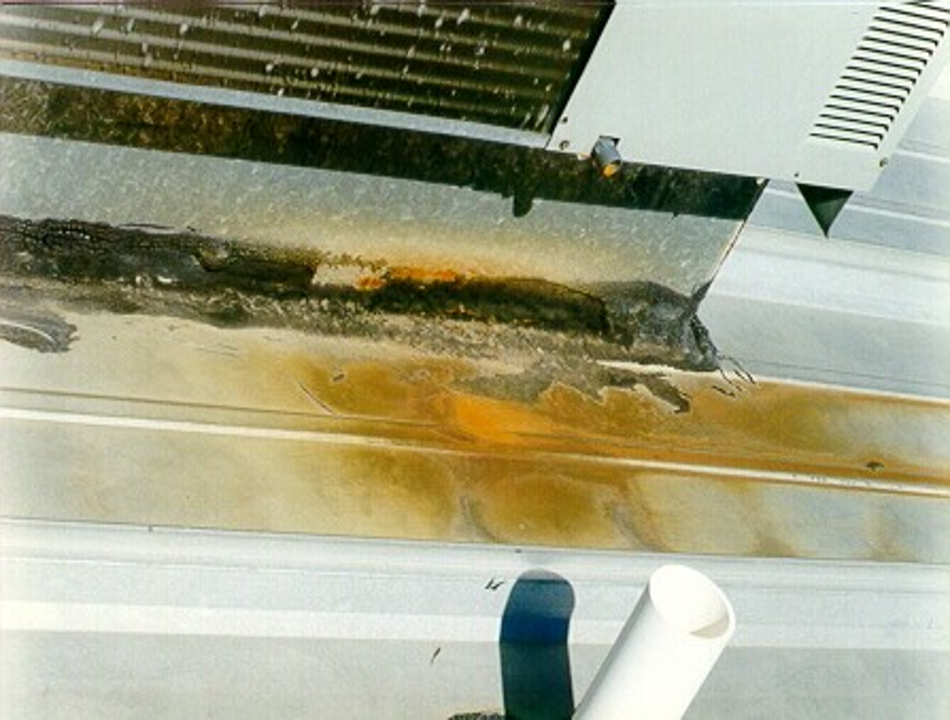
Post-installation, panels must also not come in contact with or be exposed to the runoff from chemicals, such as acid from batteries and acid washing brick, and even pressure-treated lumber.
What To Do In Case of Rust
Let’s face it. Sometimes, despite all your efforts…someone didn’t get the memo and rust happens. Now what do you do? How can you safely can attempt to repair it or remove it without causing more damage?
First off, here’s what NOT to do. Heavy solvents that are meant to remove paint or stains can/will adversely affect the metal. If you witness a rust stain on the roof, don’t go up there with paint remover, acetone or any other toxic solvents and start scrubbing on it because you most likely could make matters worse. You might remove the stain along with the finish entirely, leading to bigger problems. (If you’re an end user, check your finish warranty and manufacturer maintenance documentation supplied to you by your builder/installer for guidance on cleaning and repairs.)
The key is to identify if the rust is just a stain /discoloration or it’s more systemic. Is the catalyst (ex.: a shaving) causing the rust still present? If it’s just a surface stain and the coating hasn’t been damaged, it might just be a matter of getting some mild detergents or something else to remedy the situation. Some good options are Formula 409 or Simple Green and Soft Scrub without bleach or something similar. and it may require a trial and error process to determine which is most effective based on the condition you’re trying to remedy. Products such as Rid O’ Rust or similar whose key ingredient is oxalic acid can be used diluted with water. With any of these products, test a small area first and wait to see results before proceeding to larger areas. And always be certain to fully rinse/flush areas of cleaning products to ensure no residues /films remain.
Always start light. Don’t break out any steel wool and/or metal grinders and start trying to get the rust off the panel that way. If it looks to be more than just a stain—perhaps you clean it and a few weeks later it comes back—that most likely means that the panel has actually been damaged and you’re not just going to get rid of the “stain” by cleaning it as it’ll return. It may require touchup paint or even a panel replacement. It depends on the severity of the damage. If this is the case, be certain to check with your installer, maintenance manual, and panel supplier for further instructions on how to address.
For more information on panel maintenance and warranties, see the MBCI website resource center.