Nice Curves! Stunning Architecture with Curved Roofing and Walls

Breaking away from simpler panels, more and more architects are experimenting with arched and curved metal roofing and wall panels to upgrade their designs. This enables designers to incorporate exciting elements like concave and convex curving, not as feasible with other cladding materials.

Combined with unique angles, increased edge finishing options, appealing gutter options and greater compatibility with shingle types, architects now have access to a greater assortment of mix-and-match options.

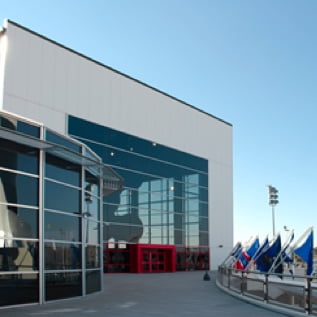
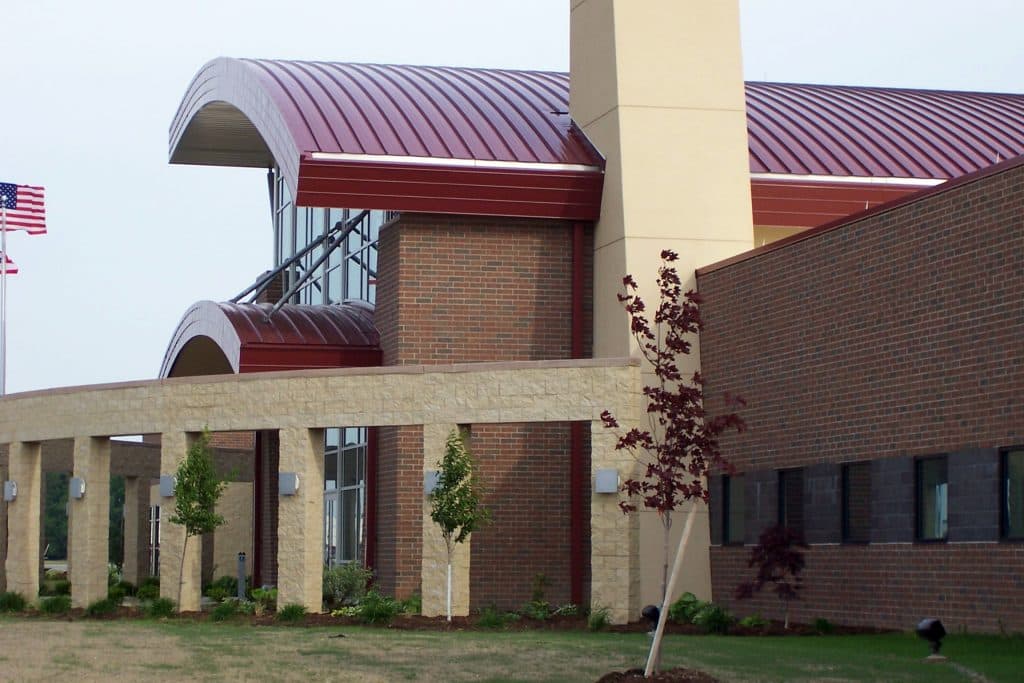
For example, at Owens Community College in Findlay, Ohio, a regal red, double-curved canopy crowns the curtainwall with 15,500 square feet of 22-gauge curved metal roof panels. Designed by Rooney Clinger Murray Architects, the structural roofing panel system, fabricated by MBCI, is ASTM tested for air infiltration and water penetration, and incorporates a 2-inch tall standing seam that was field seamed during the installation process. The contractor, Charles Construction Services, won the American General Contractors (AGC) Build Ohio Award for “New Construction Under $10 Million.”
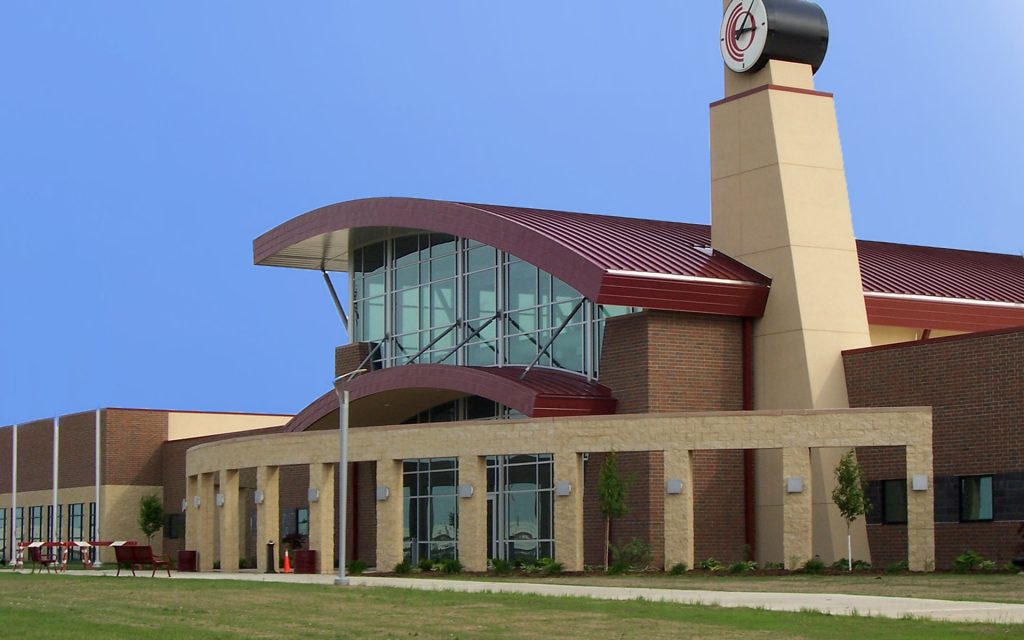
Owens Community College
For Owens Community College, the Curved BattenLok® metal panels in red accentuate the arch of the campus, making it the focal point of the building.

Another noteworthy curved design example is the Central Los Angeles Area High School #9, designed by HMC Architects. “Metal enabled us to clad buildings of different geometries, including curved geometries, in one material, while also giving them a special appearance,” reported Kerstin Kohl, spokesperson for the project’s design architect, COOP HIMMELB(L)AU, in a Metal Construction Association case study, Steeling Art for Students.

Using CAD and BIM for Curved Metal Panels

For designing and fine-tuning curved metal creations, the latest CAD and BIM features are key tools for architects.

In creating the “geometry that has been freed from the relentlessness of the orthogonal layout,” as described by Mark Dewalt, AIA, principal at Valerio Dewalt Train, in a recent article in Metal Architecture magazine, New Trends in Metal Architecture, designers are using CAD in shop drawings to support unique façade fabrication.

“The use of computer design to warp and twist and perforate will give metal greater longevity, added Kevin Marshall, AIA, LEED AP BD+C, associate architect, Integrated Design Solutions.

Similarly, BIM software is further supporting enhanced compatibility with metal roof and wall designs with newer features such as automated light gauge steel wall framing work and the ability to more easily configure supporting structures, openings, complex L or T connections and service hole positions while providing photorealistic renderings so that the client can see exactly how their building will look once built.
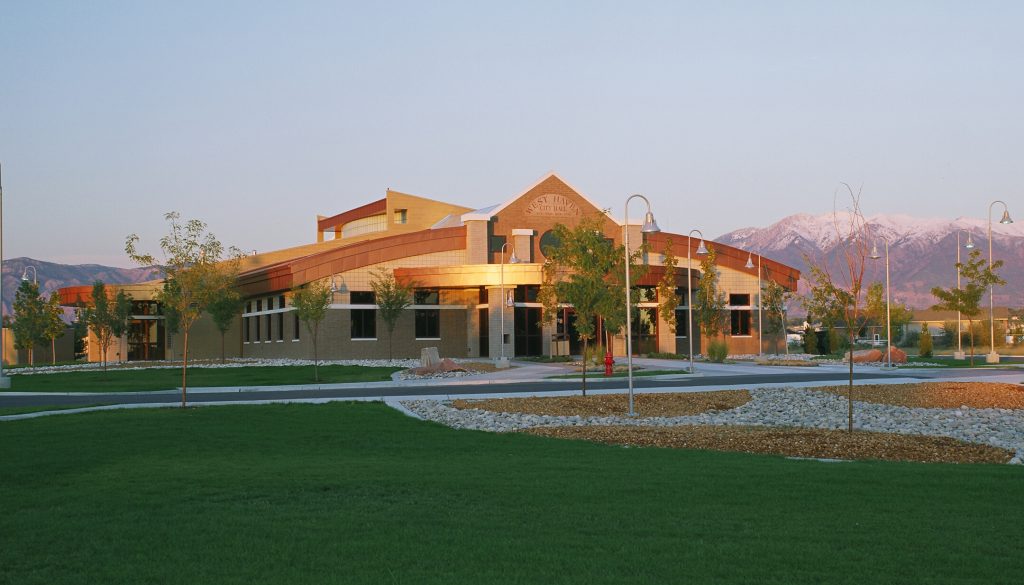
West Haven City Hall
West Haven City Hall combines MBCI’s Curved BattenLok® in Copper Metallic with Artisan® Series and Flat Sheet.

Ensuring a Tight Building Enclosure with Curves

As with any roofing type, designing and installing a tight building enclosure for curved roofing and walls is essential for delivering a high performing building.

For starters, architects must choose an appropriate vapor retarder, especially in cooler climates and interior relative humidity levels of 45 percent or greater. Also, buildings with high humidity interiors and construction elements that may release moisture after the roof is installed–such as interior concrete and masonry, plaster finishes and fuel-burning heater– require special considerations when choosing vapor retarders.

With utility clips, some curved panels will lay tight to the wood deck, but if tin tabs are used to attach the moisture barrier to the wood deck, then they will need to be covered to prevent the tabs from rusting the back side of the panels. Similarly, plastic washers may not be the best option as they run the risk of impacting the panels, resulting in undesired aesthetics. Rather, peel and stick membranes are a preferred underlayment because they eliminate the potential of underlayment fasteners penetrating or dimpling the panels.

A Savvy Look for Design

Whether it’s wavy, circular or some other exciting soft geometric shape, curved metal roofing and walls open up all kinds of new design possibilities. Out of the box, literally, architects are actively producing exciting, eye-catching creations with these welcomed capabilities.
Calculating Cool Roof Energy Savings

Whether it’s providing waterproofing, reducing thermal expansion and contraction, or supplying chemical and damage protection, cool metal roofing has much to offer. Of course, the most substantial benefit is the energy savings gleaned from reduced rooftop heat levels driving down air conditioning loads. In fact, the Lawrence Berkeley National Laboratory’s heat island group projects a whopping $1 billion reduction in cooling costs if cool roofs were to be implemented on a nationwide basis.

To assist architects in determining the kinds of energy savings that can be expected from cool metal roofing, the Oak Ridge National Laboratory (ORNL) has parlayed the data it gathered from a three-year evaluation of metal roofing products into a whole building energy savings calculator.

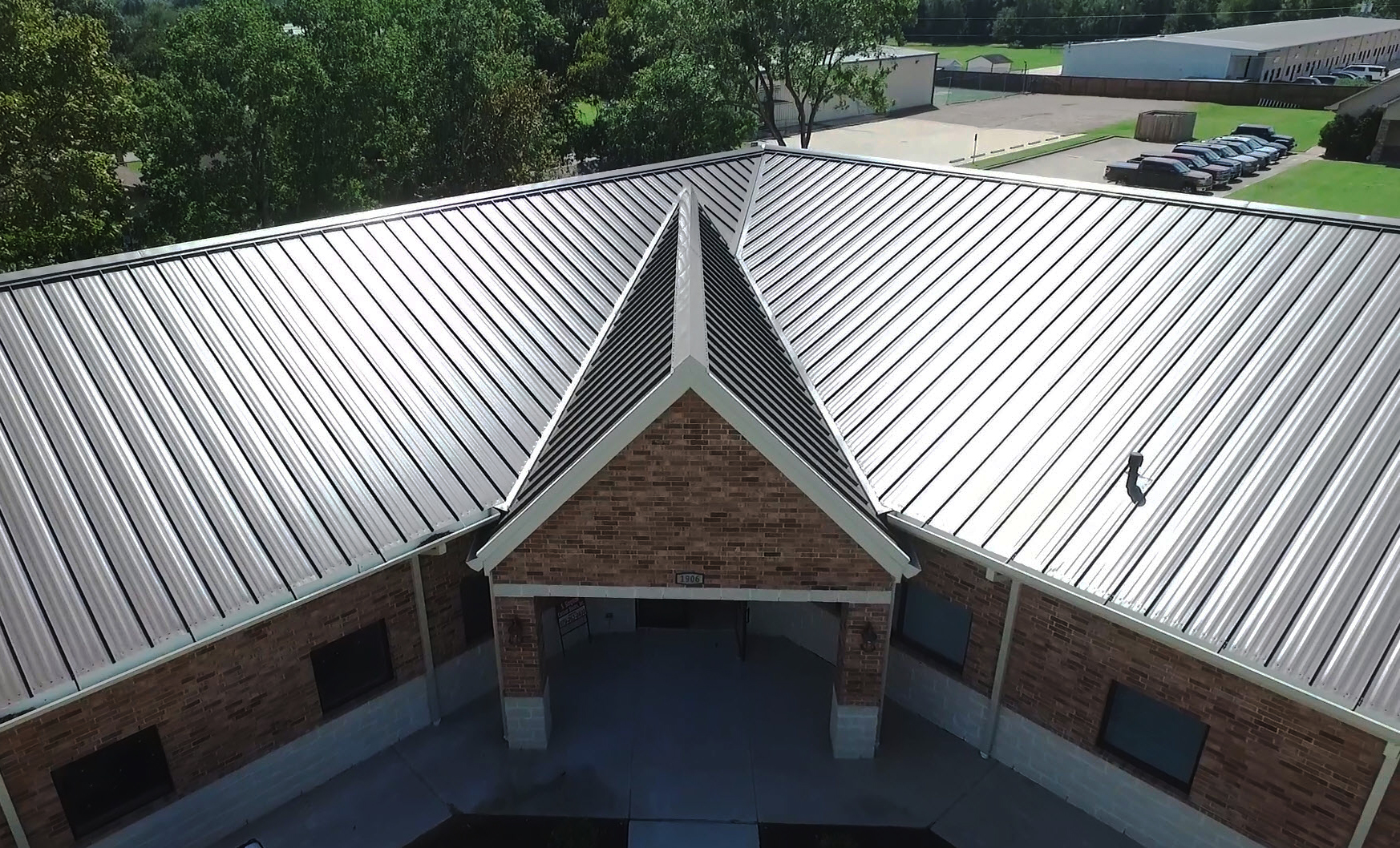
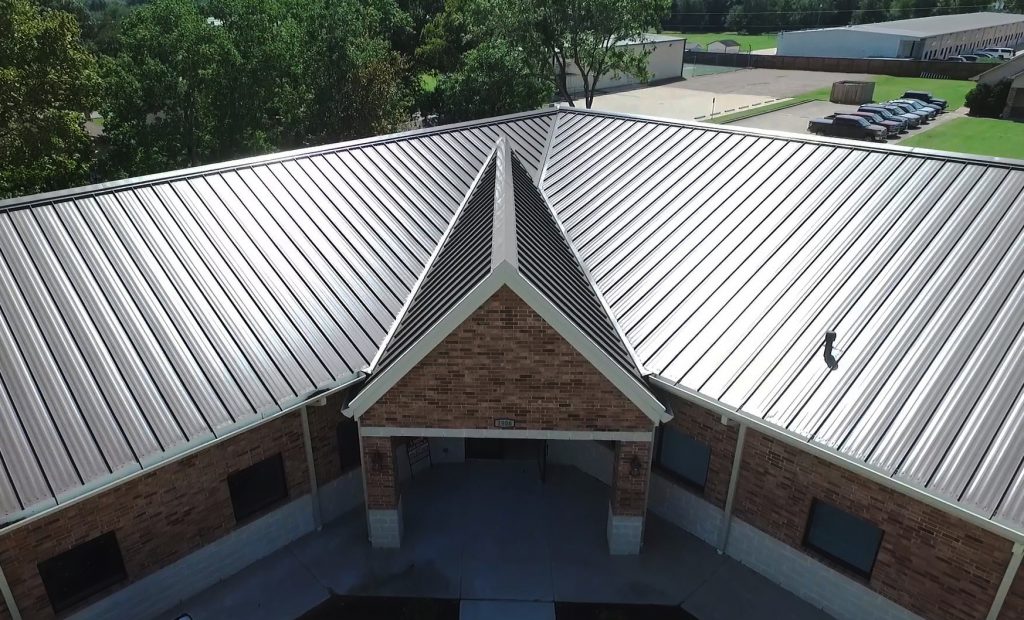
Cool metal roofs are offered in a variety of colors.
In addition to energy efficiency, cool metal roofs are known for extended durability and longevity.

Cool Roof Calculator

This calculator is called, simply enough, the Cool Roof Calculator. The easy-to-use tool is described as a quick way to compare overall energy costs and savings for a variety of roof and building conditions. Unlike some energy modeling calculators, which are limited to steep slope residential roofs with attics, ORNL’s tool models the typical low slope commercial roof with insulation placed directly over the deck and under the roofing membrane.

To calculate approximate energy savings offered by a cool metal roof, architects are instructed to input the building’s location, proposed roof R-value, roof reflectance and emittance, base energy costs, equipment efficiencies, electrical demand charges and duration.

While experts suggest that it may be difficult to accurately predict the base use and peak demand without detailed construction and cost information, tools such as the ORNL’s cool roof calculator can be a useful way to gather helpful performance estimations for a variety of building types and locations.

Attempting to do just that, the calculator outputs a number of values to offer an approximate estimate of potential energy savings, broken down into cooling energy savings—a calculation of air conditioning savings from base use and peak demand reductions—and cooling season demand savings, an estimate of the peak demand charge reduction enabled by enhanced roof reflectivity.

Accessible at http://rsc.ornl.gov, users can also compare the energy performance offered by a cool roof vs. a conventional black roof.

“It’s a nice tool to give people a feel for where a cool roof would actually help them and have the greatest impact in terms of energy use,” relates Robert A. Zabcik, PE, LEED AP BD+C, director, research and development, NCI Group Inc., Houston, in a Metal Construction News article.

Roof Reflectance Baseline

Roof reflectance and emittance, requirements and options, can be found in energy codes such as IECC, ASHRAE 90.1, California Title 24, and other local codes. Requirements may vary based on roof slope and climate zone, and may allow for either aged or initial solar reflectance, thermal emittance and/or SRI.

Fortunately, MBCI continues to stay current with individual testing and also maintains third-party tested and verified product listings through entities such as the Cool Roof Rating Council, and the U.S. EPA’s ENERGY STAR®.

Urban Heat Islands, Part 1: How Cool Metal Roofs Benefit the Community

Summer in the city usually means it’s hot – hotter than surrounding areas. Those who have investigated this phenomenon have identified the presence of “urban heat islands” – places that heat up disproportionately to those nearby.

Urban Heat Islands Form from an Abundance of Dark Surfaces in Cities

One reason for this is the predominance of dark asphalt pavement and dark-colored roofing. The significance is that dark surfaces are known to absorb sunlight and re-radiate it back as heat. That’s how thermal solar panels work, but it is also dramatically apparent when walking across a black asphalt parking lot in the summer sun. The heat is coming not only from the sun above, but from the pavement below.

If nearby buildings have dark-colored roofs, the same is happening there. Studies have shown that this re-radiated heat can build up in urban areas and raise the surrounding air temperature by up to 5 degrees Fahrenheit on average. So while it might be a tolerable 85 degrees and pleasant a few miles away, the urban core could be sweltering in a self-induced 90 degrees – even higher on those dark roofs and parking lots.

Measuring Solar Heat

How do we know what materials help or hinder these urban heat islands? First, all materials will absorb and reflect varying amounts of solar radiation based primarily on the color and reflectance of a material. The way to measure that variation is based on ASTM test standards E903 and C1549. These tests are used to determine the solar reflectance (SR) of materials, which is expressed as the fraction of solar energy that is reflected on a scale of 0 to 1. Black paint, for example, has an SR of 0 and bright white titanium paint has an SR of 1 (highest reflectance).

Reducing Heat Islands with Cool Metal Roofs

Taking things one step further, the Solar Reflectance Index (SRI) has been developed as a measure of the ability of a constructed surface, particularly roofs, to stay cool in the sun. It relies on both an initial SR value as well as a thermal emittance value being determined for a material or product. Using ASTM E1980 and values from the Cool Roof Rating Council Standard (CRRC-1), an SRI of between 0 (common black surface) and 100 (common white reflective surface) can be determined. The higher the SRI, the higher the amount of solar radiation that is reflected and thermal radiation minimized, thus creating a comparatively cool surface.

Metal roofing is particularly well suited to achieve high SRI values, minimize heat build-up, and reduce urban heat islands. Recognizing this, many manufacturers test metal roofing products and publish the SRI results, allowing professionals and consumers to make informed decisions. Of course, other roofing materials are tested for SRI values too, but few test as effectively and economically as metal roofing.

(For specific information about the radiative properties of MBCI’s colors, consult our listings in the respective databases on the CRRC and ENERGY STAR websites.)

Benefits to the Community

Specifying and building with high-SRI metal roofs has benefits beyond just the immediate building—reducing urban heat islands keeps excess heat from building up in the surrounding community too. Higher summer temperatures can be detrimental to plants, trees, and people who are outside in urban areas. By using cool metal roofs that reduce the surrounding air temperature, plants don’t lose water as quickly, people are more comfortable, and trees are less stressed. Cooler air temperatures around a building also means air conditioning does not need to work as hard or as often. That translates into less energy use and fewer greenhouse gas emissions from electricity to run the air conditioning—both of which could significantly contribute to cleaner air in the community.

Results

By recognizing the existence of urban heat islands and their impact on people and the environment, those of us in the design and construction field can choose to do something about them. By specifying and installing high-SRI cool metal roofs, the environment benefits, people benefit and our buildings benefit.

Learn more in our blog post, “Code Requirements for Cool Roofs with Climate Zone Specifics.”

Daylighting 101

In the age of increased energy efficiency requirements in buildings, designers often find themselves spending time and resources squeezing performance out of systems with relatively little gain in efficiency. More and more, building insulation systems seem to fall into this category. The authors of the building codes recognize this as well and have reacted by turning their focus on other metrics like air infiltration where more substantial gains are to be had. A similar situation exists with lighting efficiency. However, when it comes to daylighting, designers are often pushed out of their comfort zone because lighting concepts and terminology is quite esoteric and difficult to comprehend.

Daylighting
m
The truth is that most people take light for granted and aren’t aware of the complexity of lighting for human activity and comfort. Probably the biggest reason for this complexity is the fact that the human eye is the only way we can judge light and although the eye is an evolutionary masterpiece, it has its own idiosyncrasies and no two eyes work identically. For instance, the typical human eye can discern shades of green at much greater accuracy than other colors and because of this sensitivity, green light is often perceived as brighter than other colors at the same energy level. Therefore, quantifying light level for human comfort and function must take this sensitivity into account, leading to some complexity. Here are some basic principles that you need to understand:

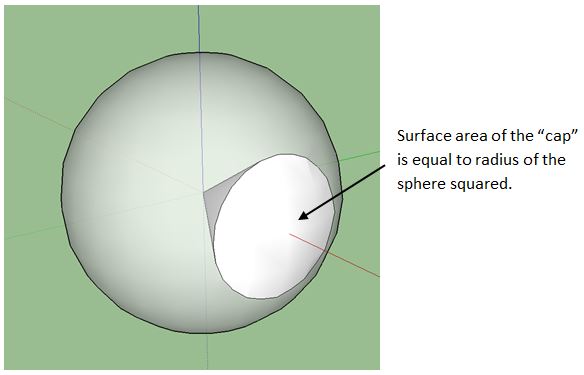
A steradian is a unit of solid angle measure. You can think of a 1 steradian solid angle as a cone cut out of a sphere with the apex of the cone at the center of the sphere and cross-section angle of approximately 66 degrees. A unique property of a 1 steradian solid angle is that the area of the semispherical “cap” captured by the cone is equal to the radius of the sphere squared. This makes it a convenient shape to use in measuring the amount of light projecting from a source at the apex of the cone through its interior and onto the cap because the amount of energy passing through any cross-section along the way is always the same. There are 4π, or approximately 12, steradian in a sphere.

Surface area of the "cap" is equal to radius of the sphere squared.

Light is generated at the molecular level by the outer bands of electrons surrounding a given atom. When these electrons become excited at a high enough level, they emit a burst of energy in the form of electromagnetic radiation of a wavelength interval unique to the emitting atom in order to return to a lower energy state. If the energy level is just right, this wavelength will be in the visible light spectrum and viewed as a specific color. White light is formed when many atoms respond at various energy levels distributed across the entire visible spectrum in a pattern such that the energy transmitted is roughly constant with wavelength. The human eye is not responsive enough to discern the different colors hitting it, so an overall stimulation results in a static or “white” response. (There is a similar concept for sound as well, called “white noise”, when the ear cannot detect the individual vibration frequencies.)

The absolute brightness of light is given by the total energy it transfers through electromagnetic modulation. It is determined by summing up the energies transferred by each incorporated wavelength. As light travels from a point source, this energy spreads, causing the amount of energy arriving at a single point in space to decrease as that point is placed farther away from the light source. Brightness decreases with the square of the distance from which it is viewed. In other words, a light will appear ¼ as bright when viewed from a distance twice as far.

Because the human eye is more sensitive to green light than other colors, the brightness it perceives from different lights can only be effectively compared at the same color or wavelength. For light used for human function and comfort, it has been standardized to quantify the brightness at the 555 nanometer wavelength, which is near the center of green in the visible light spectrum, and then adjust for the effect of other colors consistent with how the human eye perceives them. Color is accounted for by weighting the energies transmitted at other wavelengths using the luminosity function. The resulting quantity is called perceived brightness. The luminosity function is similar to a bell curve and it represents how relative brightness of various colors is perceived by the typical human eye. As you might expect, the luminosity curve peaks at a wavelength near 555 nanometers.

Absolute brightness is measured in watts and should only be used when comparing lights of the same color. This should not be confused with power consumption, which is also measured in watts. Perceived brightness is instead expressed in candela and is the only way light of mixed color (on non-monochromatic) can be compared. A one candela light source with a wavelength of 555 nanometers transmits 1/683 of a watt of energy.

It is also important to be able to quantify total light output of a light source. Real-world light sources are not usually of equal brightness in all directions, so candela is not the best measurement to use. To account for spatial variation, total light output is defined as the sum total of light passing through every point in a cross-section of a one steradian solid angle, considering a light source at the apex, divided by the area of the section. This results in the same quantity regardless of the location of the cross-section. So, if a light were to transmit one candela through each point in the cross-section of a unit steradian, then it would be said to produce one lumen of light. Likewise, a 555 nanometer light source radiating one watt per steradian of energy produces 683 lumens.

Finally, the effect of light projected onto a surface must be defined, commonly called illumination level. If a light projects through a solid angle of one steradian at a uniform perceived brightness of one candela, the illumination level achieved one foot away is called a footcandle. This definition confuses many people because it is contrary to what the name might imply. But because a unit steradian is used as the basis, a footcandle equates to one lumen per square foot and it is generally much easier to think of illumination level in this way. Lux is the metric equivalent to a footcandle and there is about 10.8 lux in a footcandle. Since illumination level differences of one tenth of a footcandle are not detectable by the human eye, this is often simplified to 10 lux per footcandle.

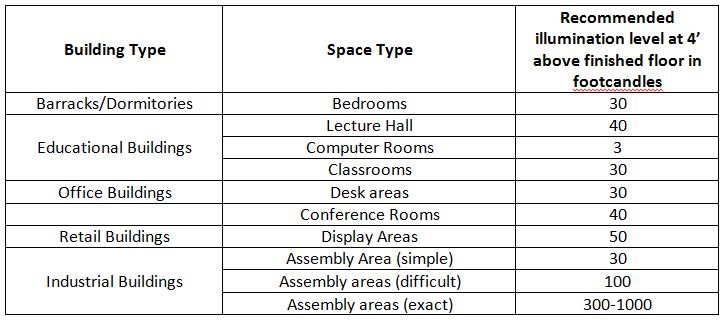
To put this all into context, a dome skylight 24” in diameter, elevated a foot above a 30’ high roof on a 20’ x 20’ grid on an open building in El Paso, Texas, achieves about 25 footcandles at a level 4’ above the floor at noon on March 21st (typical spring equinox). Compare this versus the following recommended illumination levels for various tasks as recommended by The Whole Building Design Guide:

Whole Building Design Guide Illuminatin Levels

Understanding these concepts will help you get more out of MBCI’s latest whitepaper, Shining Light on Daylighting with Metal Roofs, where MBCI explores the subject in detail, wholly within the context of metal roofs and metal wall systems. We hope you find it…err, enlightening.

Download the White Paper, Daylighting with Metal Roofs

Snow and Metal Panel Roofs: Part I

It’s February; winter storm Jonas happened last month. Snowstorms will continue to occur, and heavy snowfall can have many negative effects on roofs. What should you consider when designing a roof in snow areas, especially those with high snow amounts?

Rustic Trail Blog

What to Consider when Building Metal Roofs

Roofs on buildings in snow areas—from a structural capacity point of view—can be designed to be any low-slope or steep-slope roof system. Roof structures can be designed and built to accommodate any anticipated snow loads. From a weather-protection point of view, snow buildup on a roof can be problematic. The extra load and the risk of leaks are not desirable; however, keeping snow on a roof is often the acceptable way to deal with it.

Roof Slope

Unquestionably, the slope of the roof matters when it comes to snow staying on or sliding off. Once a roof slope gets to be about 45 degrees (i.e., 12:12), slope becomes the overriding factor for sliding snow. The amount of snow and the roof type also matter. From a designer’s perspective, there are also a number of localized issues to consider when designing for snow on roofs.

Snow Density

The amount and density of snow also matters. More snow means more weight. More weight means a greater sliding force down (along) the slope of the roof. On slopes less than 45 degrees (e.g., 6:12 to 9:12), a low coefficient of friction (such as on smooth pan metal panels) means less resistance to sliding. Striations and embossing add a small 3D profile and improve the resistance to sliding, especially if they run transverse to the slope.

When heavy, dense snow slides it can pack a punch. Such snow sliding down a roof can shear off exhaust vents; therefore, rigid vent pipes are needed, along with a secure method of attachment. Further, installing vent pipes as high up on the slope as possible reduces the amount of potential shear load. Consider the potential load on a vent pipe that’s 5 feet from the eave with a 40-50-foot eave-to-ridge length! Reverse that and most of the load goes away.

Roof Material Type

Material type and surface color make a difference, specifically a roof’s emissivity. Metal roofing absorbs heat more quickly and radiates heat more effectively than most other roofing materials. Darker colors enhance this effect. Even with as much as 3 to 5 inches of snow, UV light passes through it; less light passes the denser the snow. (The proof: solar energy panels [photovoltaics (PV)] work when covered in some snow.) This effect only happens on sunny days, and is most effective on south-facing roof areas. If there is heat loss from the building up through the roof, the heat will help melt the snow at the roof/snow interface. This creates a potential for sliding snow.

In part II of this blog, I’ll discuss the logic, experience and engineering that goes into designing a metal roof for snow. In the meantime, learn how to properly install snow retention devices, and watch how a New Jersey home heats and cools itself by gathering snow and rainwater.

Wind Designs for Metal Roofs

One of the most important requirements for metal roof installation is ensuring that a roof stays in place when the wind blows.  The core concept is that the roof’s wind resistance needs to be greater than the wind loads acting on a building’s roof.  Wind resistance is most commonly determined by a physical test; wind loads are calculated.

Calculating Wind Loads

Wind loads are based on the design wind speed (which is based on the geographic location of the building), height of the roof, exposure category, roof type, enclosure classification and risk category.  The height of the roof, and exposure and risk categories are factors that are used to convert design wind speed to an uplift pressure.  Wind speed maps and the rules to calculate wind pressures are found in Section 1609, Wind Loads, in the 2012 or 2015 IBC.  The information is based on an engineering standard written by The American Society of Civil Engineers, “ASCE 7-10, Minimum Design Loads for Buildings and Other Structures.”Wind Uplift Testing_2

Defining Exposure Risk Category

Exposure categories relate to the characteristics of the ground, such as urban and suburban areas or open terrain with some obstructions or flat areas like open water.  There are 4 risk categories.  Category I is low risk to humans, such as agricultural facilities. Category III includes, for example, buildings for public assembly, colleges and universities, and water treatment facilities.  Category IV includes essential facilities like hospitals and police stations.  Category II is everything else—most roofs are Category II. A building shall be classified as enclosed, open or partially enclosed. The enclosure classification is used to determine the internal pressure coefficients used to calculate design roof pressures.

Determining Wind Pressures

Contractors should work with a structural engineer or the metal panel manufacturer to determine the wind pressures for each roofing project.  Wind pressures are determined for the field of the roof, the perimeters and the corners, where loads are largest.  Only after determining the design pressures can the appropriate metal panel roof system and attachment requirements be designed.

Testing Uplift Resistance

Physical tests are the most common method to determine uplift resistance.  Panel width and profile, metal type and thickness, clip type and frequency, type and number of fasteners, and the roof deck contribute to the uplift resistance of every metal panel roof system.  Metal panel roof systems installed over solid substrates (with concealed clips or through-fastened) can be designed using the following test standards: FM 4471, ASTM E 1592, UL 580, or UL 1897.  Metal panels installed over open framing can be designed using either ASTM E 1592 or FM 4471.  Manufacturers run these tests; uplift resistance data is available for most metal panel roof systems.  Installers can get this data directly from manufacturers or from web-based listing services provided by FM and UL.

Designing a Legal Metal Roof System

Wind loads and wind resistance information is necessary to verify code compliance.  Get it for every project you install!  Using systems that not only have been tested to the correct tests, but using systems that have uplift resistance greater than the design loads is key to a successful installation, and quite frankly, key to installing legal roof systems.

Roofing Underlayment and Its Attachment Requirements

The International Residential Code (IRC) is commonly considered to be a prescriptive code, which means there are many requirements included that provide specific directions. Prescriptive-based code language provides a simpler method of enforcement for inspectors. And shouldn’t that be the case for one- and two-family dwellings, where well built and affordable is the goal?

Underlayment Requirements

In Chapter 9 of the 2015 IRC, the underlayment requirements for steep-slope roof coverings are included in three tables—material types, application and attachment requirements. Each table includes specific information for metal panels and separates out high-wind areas (defined as greater than 140 mph, and is only in the southernmost portion of Florida).

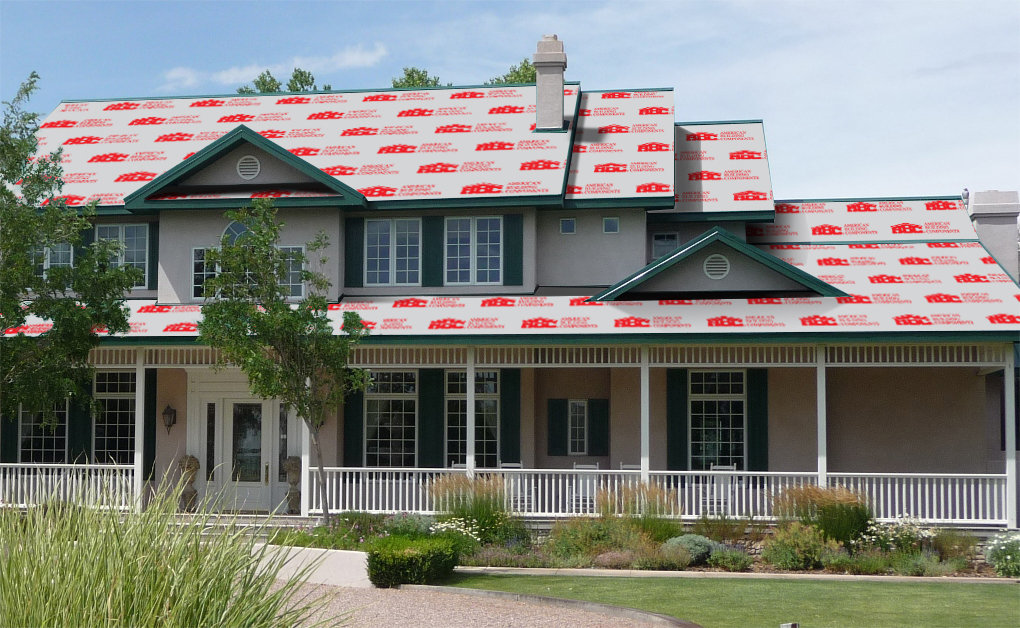
Roofing underlayment by our sister company ABC.

Material Type Requirements

Underlayment types for metal panels needs to only comply with manufacturer instructions. D226 and D4869 underlayments are viable options, as long as metal panel manufacturers allow them. And very importantly for metal panels, synthetic- / polymer-based underlayments are a viable option, again, as long as the panel manufacturer allows them to be used.

For metal panels in high wind areas, only D226 Type II and D4869 Type IV are allowed. In other words, only the heaviest materials are allowed in the highest wind zones.

Application Requirements

Simply put, underlayment should be applied according to the manufacturer’s installation instructions. For high-wind areas, specific application requirements are provided:

“For roof slopes from two units vertical in 12 units horizontal (2:12), up to four units vertical in 12 units horizontal (4:12), underlayment shall be two layers applied in the following manner: apply a 19-inch strip of underlayment felt parallel to and starting at the eaves. Starting at the eave, apply 36-inch-wide sheets of underlayment, overlapping successive sheets 19 inches, and fastened sufficiently to hold in place. For roof slopes of four units vertical in 12 units horizontal (4:12) or greater, underlayment shall be one layer applied in the following manner: underlayment shall be applied shingle fashion, parallel to and starting from the eave and lapped 4 inches. End laps shall be 4 inches and shall be offset by 6 feet.”

Underlayment Attachment Requirements

Underlayment should be attached according to the manufacturer’s installation instructions. For high-wind areas, specific attachment requirements are provided:

“The underlayment shall be attached with corrosion-resistant fasteners in a grid pattern of 12 inches between side laps with a 6-inch spacing at the side laps. Underlayment shall be attached using metal or plastic cap nails or cap staples with a nominal cap diameter of not less than 1 inch. Metal caps shall have a thickness of at least 32-gage sheet metal. Power-driven metal caps shall have a minimum thickness of 0.010 inch. Minimum thickness of the outside edge of plastic caps shall be 0.035 inch. The cap nail shank shall be not less than 0.083 inch for ring shank cap nails and 0.091 inch for smooth shank cap nails. Staples shall be not less than 21 gage. Cap nail shank and cap staple legs shall have a length sufficient to penetrate through the roof sheathing or not less than 3/4 inch into the roof sheathing.”

Self-Adhesive Underlayment Options

Of course, there are exceptions to these requirements. The first is to use a self-adhesive underlayment (i.e., ice dam protection) over the entire roof. The material needs to comply with ASTM D1970, “Standard Specification for Self-Adhering Polymer Modified Bituminous Sheet Materials Used as Steep Roofing Underlayment for Ice Dam Protection” and be installed per the metal panel manufacturer’s requirements. The code also points out that roof ventilation must be considered because a self-adhesive sheet is most often an air barrier and a vapor retarder. Concerns with moisture are quite relevant when these types of materials are installed over the entire roof deck. The second exception is to tape the seams of the roof deck with 4-inch wide strips of D1970 material, and then cover the deck with underlayment. The second exception is not widely used, except when trying to reduce, or eliminate, air flow through the deck while allowing moisture to escape.

IRC Requirements for Attaching Metal Panels

The IRC also includes some, but not many, requirements for the attachment of metal panels. The IRC requires metal panels be attached per manufacturer’s installation instruction and “be secured to the supports.” This implies fasteners should be attached to purlins or rafters, but one could easily argue the roof deck is the support for the metal panels. However, the IRC does provide specifics for fasteners used to attach metal panels, but the following is only applicable if manufacturer’s instructions don’t include fastener requirements. The IRC states:

“In the absence of manufacturer’s installation instructions, the following fasteners shall be used:

  1. Galvanized fasteners shall be used for steel roofs.

  2. Copper, brass, bronze, copper alloy and 300-series stainless steel fasteners shall be used for copper roofs.

  3. Stainless steel fasteners are acceptable for metal roofs.”

The Importance of Following IRC and Manufacturer Instructions

The IRC is a prescriptive code and there are many specific requirements for underlayment and metal panels. But because of the wide variety of styles, the IRC appropriately requires installation according to manufacturer’s instructions. It’s important to specify a new roof using both manufacturers’ instructions and IRC’s specific requirements. And, remember, a metal roof will have a long service life, so the underlayment’s service life should equal that of the metal roof. Don’t be shortsighted when designing for longevity.

Passive Aggressive: Metal Buildings Suit Passive House Standards

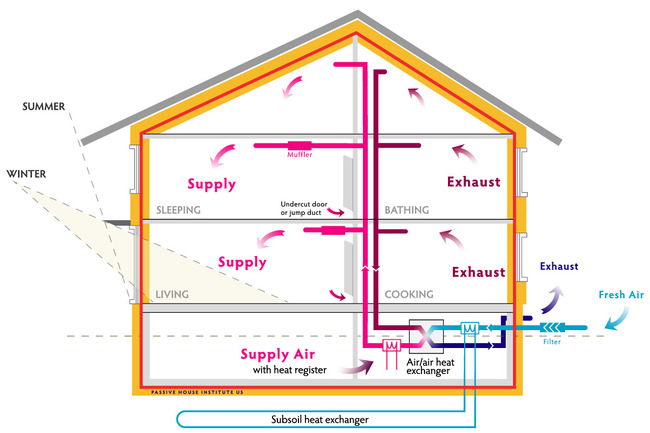
Today’s big push toward Passive House standards — the formerly German building certification that recently gave rise to a U.S. counterpart, Passive House Institute US, with its PHIUS+ certification — is also creating more interest in the highly efficient, highly insulated metal buildings. The projects range from metal-clad houses to IMP commercial facilities to the first Passive House high-rise in the world, Cornell University’s 26-story residence tower, clad in metal panels.

Metal? That’s right. While this surprises few design and construction professionals, consider these facts: (1) IMPs and metal roofs protect their insulation backup better than many kinds of construction methods, ensuring good long-term thermal resistance, or LTTR. (2) Passive House requires airtight construction with minimal air infiltration, which is ideal for the tight, engineered construction and inherent air barrier quality of metal panels. (3) Metal roofs and walls are available with high-efficiency Energy Star windows and skylights that are designed to integrate with the cladding and roofing systems.

Photo courtesy of www.phius.org

These reasons also explain why IMPs have been used extensively for net-zero energy buildings in recent years, which also demand highly energy-efficient enclosures along with the means to produce energy with solar heating, photovoltaics, geothermal and wind turbines.

So when it comes to Passive House and the PHIUS+ certification, often the choice of insulated metal panel (IMP) systems is among the first major project choices. Two immediate benefits arise, says the Metal Construction Association, for solar reflectance (SR) and thermal emittance (TE). “Metal cladding has very dependable and high SR and TE values, and it employs polyurethane foam, one of the most efficient types of insulation, which maximizes building energy efficiency,” says Ken Buchinger, general manager of Technical Services with MBCI.

Coupled with the robust barrier provided by coil metal and the tight construction afforded by pre-engineered, prefabricated panel systems, the resulting enclosure type is among the most efficient available. And that’s not just for new construction: A large number of Passive House projects have retrofitted IMPs over leaky existing buildings of masonry, brick or stucco. In its certification guide for PHIUS+, the Passive House Institute US specifically cites metal roofing and metal cladding systems to meet the rigorous criteria.

For the net-zero approach, Buchinger adds that solar photovoltaic systems and solar water heating systems can be installed on a metal roof, penetration-free, resulting in high performance with minimal risk. “Metal roofing, known to last 60 years or longer, is the only roof type that can outlive a PV system mounted on it, meaning zero maintenance and low in-place cost for the roof and PV system together,” he explains.

Whether the approach is passive or zero, we’re seeing a new generation of super-efficient buildings today. New certification rules were unveiled this year for the Passive House standard have lots of buzz. And the latest projects, many with metal wall and roof panels, have resulted in facilities using as little as 10% of the energy required for comparable projects, according to PHIUS.

That’s why passive design sounds pretty aggressive for going green.

Codes: More than the IBC and IRC

IBC IRC CodeWe all know to look to IBC Chapter 15 and IRC Chapter 9 for information about roof systems.  These two “Roof Assemblies and Rooftop Structures” chapters include the requirements for fire, wind, impact, materials, and reroofing.  But did you know the scope of the building code (IBC Section 101.4) references additional model codes that are considered to be part of the requirements of the IBC?  From a roofing perspective, this scoping reference brings into play the International Energy Conservation Code (IECC) and the International Existing Building Code (IEBC).

The creators of the model codes are attempting to ensure that buildings (and roofs, in our case) are designed and built according to the most recent model codes even if they haven’t been specifically adopted by a state or local jurisdiction.  If a jurisdiction adopts and enforces the 2015 IBC, by reference the 2015 IECC and 2015 IEBC are in effect.

How do 2015 IECC and 2015 IEBC affect roofs?
The IECC Commercial Provisions include energy efficiency requirements for the same buildings for which IBC Chapter 15 roofing requirements are required.  The IECC includes minimum insulation, air barrier, and reflectivity requirements for building envelopes.  Prescriptive R-values and U-values are provided for roofs, and they are based on climate zone, metal buildings, and attics.  Minimum levels of solar reflectance and thermal emittance are required for low-slope roofs on buildings with air-conditioning in climate zones 1, 2 and 3.

Air barriers—used to reduce or eliminate air leakage—are required for new construction.  These are based on materials, systems, or the whole building.  Sheet steel and aluminum are listed as materials that meet the air barrier requirements.  Of course, the joints and seams are critical to the effectiveness of metal roofing panels when considered to be air barriers.  When reroofing, air barrier requirements are not triggered, which is significant.  But the insulation requirements are triggered.

Roofing and structural considerations
The 2015 IEBC includes sections about reroofing (Section 706, which is new in the 2015 IEBC) and structural considerations (Section 707).  The IEBC divides “Alterations” of buildings into three types: Levels I, II and III.  A level I alteration includes the removal and replacement of existing materials.  Reroofing is a level I alteration, which triggers the requirements of Chapter 7.  The Structural section includes a requirement to upgrade a wind-resisting roof diaphragm when more than 50 percent of the roof is removed where the design wind speed is greater than 115 mph, and in special wind zones.  While these are small portions of the United States, it’s important to understand this requirement.

Build roofs with the full scope in mind
Look beyond the roofing chapters to ensure that you design and build buildings according to the most recent building codes.

Storms and Safety: Metal Building Systems, Standing Strong

durable metal roof
Brester Construction features eco-FICIENT Royal panels

Welcome to hurricane season, says NOAA! Erika was a near miss, and Henri went off to sea, but with multiple storms stirring up the Pacific and a major El Niño threatening severe weather this year, building teams are focused on resilient, high-performance envelope and roofing assemblies.

The Durability of Metal Roofs

Resiliency is the watchword, and the stringent Miami-Dade County code language or similar standards are being adopted in many communities. The Florida Building Commission, as well as FEMA and NIST, have done studies of building performance during severe storms, and metal buildings were shown to perform exceptionally well. According to MBMA reports, insulated metal panels (IMPs) perform well under stresses of high winds and projectiles such as hail and wind-borne debris.

The post-storm studies everywhere from Texas to New Jersey confirmed the durability and resistance to driving rain and severe pressure differentials, too. Standing-seam roof systems and IMP façades remained intact during Katrina even as winds hit 120 mph. According to Metal Roofing Alliance, “metal roofing can have a 140-mph wind rating, meaning it can withstand wind gusts up to 140 miles per hour.” MBCI, which has achieved these ratings, has also pointed to another critical standard: wind uplift testing in accordance with Underwriters Laboratories’ UL 580, Standard for Tests for Uplift Resistance of Roof Assemblies.

Performance During Storms

Detailing of the roof-wall interface is essential to protecting against uplift. To reduce damage from wind-driven rain, manufacturers like MBCI use test protocols from Miami-Dade or the ICC (TAS No. 100-95). These standards show the security and integrity of the seams in IMP and metal roofing systems. For hail and wind-driven projectiles, the metal systems often are able to absorb impact and remain functional and retain their protective metal layers intact even if they may suffer cosmetic damage, as MetalRoofing.com forums have shown. Last, IMPs and metal roofing systems perform very well during lightning strikes — a fact that is counter intuitive but proven. In fact, use of metal roofs does not increase the chance of a lightning strike, as scientific studies show and the Metal Construction Association reported in BD+C, and as you can read more about in our blog post.

Similar to the three pigs of fable, some buildings will do well through hurricane season, while others nearby will suffer from softer connections, more porous materials and less stringent assembly designs. Many building owners will do well with metal roofing and vertical assemblies: with rugged embossed metal sandwiches over high-R-value, rigid insulation, held firmly in place with interlocking joints or lapping seams.

Best of all, the systems are complete assemblies that install as weather-tight barriers without coordinating various components and trades. They also have higher rated values than, for example, EIFS planks or fiberglass panels, some of which may suffer lost R-value when wet. With these benefits – and following the damage and disruptions caused by Hurricanes Katrina and Sandy in the United States – metal is an attractive roofing choice for weather resistance.

Find a sales representative