Metal Roof Skylight Benefits

The beauty of metal roof system skylights can be a real benefit to the aesthetic value of a metal building project. Beyond looks, though, the proven benefits of daylighting are many: building occupant satisfaction from natural lighting, mold, mildew growth prevention, and, of course, energy savings, to name a few. In fact, once the decision has been made to go with metal for the roofing material, a skylight is often a natural tie-in when it comes to sustainable design—for both form and function. To make the most of the design choice, there are a few key considerations to bear in mind during the specification and pre-installation phases of the process. 

Types of Metal Roof System Skylights 

Common metal roofing skylight installation involves one of two types of skylights, Light Transmitting Panels (LTPs) and Curb Mount Skylights. Both metal roof system skylights supply natural light into the building and provide similar benefits.  

LTPs, which are formed from a translucent material and come in many different panel profiles can be used not only in metal roofs but as an accessory for metal wall panels, too. One of the key benefits of LTPs is that the panel is formed so that it matches the configuration and characteristics of the system into which it is installed, and therefore can work seamlessly with specific metal roof systems.  

Curbed (curb mount) skylights include a raised structure (“curb”) formed around the roof opening where the skylight will be attached. Curb skylights come in many shapes and styles. 

In addition to the general “type” of the skylight, another consideration is selecting the best orientation for the skylight—which we will look at next. 

Skylight installation Metal Roof Placement, Orientation, and Climate Factor

Placement and orientation are some of the most crucial factors in getting the maximum benefit from metal roof system skylights. During the planning phase, determine the best location to achieve optimal light and avoid obstructions (such as HVAC, plumbing, electrical, and vent pipes) below the skylight. In terms of getting the most out of the skylight from an energy-savings standpoint, climate, and exposure are also key factors. For example, with southern exposure, skylights provide an excellent level of passive solar heat during the colder winter months, while keeping cooling costs down during the summer heat. On the other hand, a skylight with western exposure will increase cooling costs if the structure is in a warm climate. 
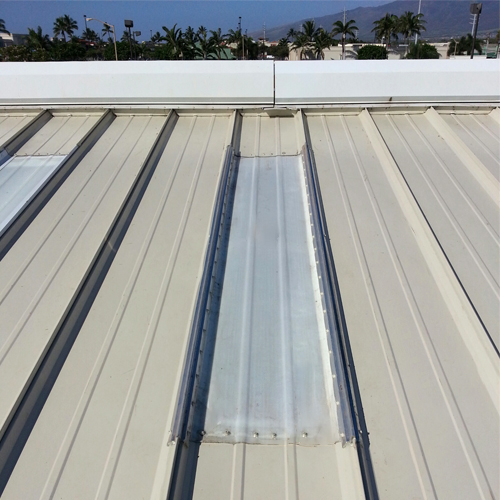
skylight on metal roof
Skylights and Light Transmitting Panels supply natural light into the building as shown above.

Installation Planning and Timing

Metal roof skylight installation can be installed during or after the roof has been installed, but it is in the best interest of the project to plan for a skylight from the initial stages of the design phase to best accommodate and prepare for the addition of the skylight. 

Safety Concerns, Responsibility, and Compliance  

Skylights and LTPs should be guarded to protect from fall through the metal railing, nets or some other protection method. Last but certainly not least, it must be stated that it is the user’s responsibility to ensure that the installation and use of all light transmitting panels comply with State, Federal and OSHA regulations and laws, including, but not limited to, guarding all light transmitting panels with screens, fixed standard railings, or other acceptable safety controls that prevent fall-through. 

For additional information about skylights for metal roofs, please contact MBCI at (877) 713-6224. 
Substrates for Metal Roofing Systems Explained

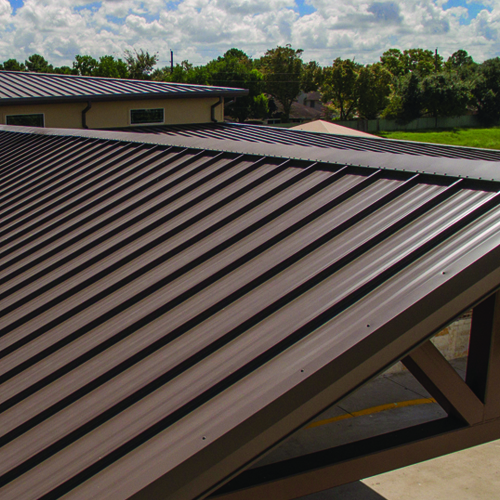
The substrate or substructure is a key part of the metal roofing system, which rests underneath the metal roof panels. The two types of substrates used with metal roofing systems are open framing and solid substrates (composite or plywood). Its two main functions are: 

  1. It acts as a base to which the metal roof material is attached-securing the fasteners and clips used to hold the panel. (Note: fasteners and clips would be attached to the substructure.) 
  1. It serves as a structural member, transferring the weight of both live (ex: wind, snow, rain) and dead (ex: HVAC units, roof materials, etc.) loads to the supporting joists or purlins. 

How to choose the correct Substrates for Metal Roofs?

Substrates for metal roofing system considerations include the assurance of a structurally sound metal roofing base, knowing the type of underlayment required, and how that required support can vary depending upon the type of metal roofing product being utilized.  

In its most basic terms, metal standing seam roof (SSR) and through-fastened roof panel systems can be supported on either open framing or solid substrates. The choice will often depend on the type of construction and the purpose of the building, including residential, commercial, industrial, and agricultural applications. 

Types of Substrates for Metal Roofing Systems

The two main types of substrates used with metal roofing systems are open framing and solid substrates (composite or plywood).

Open Framing Substrates for Metal Roofing Systems 

The open frame substrate uses wood or metal framing members (such as bar joists or min. 16-gauge purlins) to secure the metal roof panels. These members may be individual pieces of wood, formed steel, or truss-like members built from multiple individual pieces. Open-frame substrates for metal roofing systems should be used with structural-style panels in which the design can support the weight and can also span the dimensions of open areas. 

BattenLok® HS Substrates
Examples of MBCI structural-style panels include Double-Lok®, Ultra-Dek®, SuperLok® and BattenLok® HS

Solid Decking Substrates

A solid deck substrate may consist of panels, solid sheets, or closely spaced deck members (made of wood, metal or composite materials) to which the roof membrane is applied. 

  • Solid decking should be used with non-structural style panels, such as MBCI’s Craftsman™ Series – Small Batten panels. (Note: While structural panels do not require a solid deck, they may be installed over one, depending on preference.) 
  • Composite deck roof designs may or may not include rigid board insulation as part of the installation. 
  • Plywood, oriented stranded board (OSB), and individual wood planks can all be used for the construction of a solid roof deck. 

Other Considerations

It goes without saying that installers must follow OSHA practices and make sure to follow installation details of the manufacturer. Beyond this common-sense advice, there are other considerations to look at when matching substrate to a metal roof system, such as moisture control and acoustics. For instance, if you’re going over a plywood deck, you would always want to be sure you have a moisture barrier between the wood and the panel; metal decks should have a vapor barrier, and sound transfer through certain substrates could be an issue. It’s always wise to do your research–confirm with the manufacturer, check installation manuals, etc.

The main takeaway here is an awareness that depending on your project’s panel profile, you need to take steps to ensure you have the appropriate substrate. For detailed information on MBCI roof panels and substrates, view MBCI’s standing seam panels.

MBCI and D.I. Roof Seamers Announce Partnership

February 13, 2023 

CARY, N.C.–(BUSINESS WIRE)–Cornerstone Building Brands, the largest manufacturer of exterior building products in North America, announced today a new partnership with D.I. Roof Seamers that will offer its MBCI customers greater access to the latest in seamer equipment for its industry-leading standing seam profiles. Through D.I. Roof Seamers, MBCI now offers customers better seaming equipment with the newest features and expertise direct from the seamer manufacturer.  

D.I. Roof Seamers offers superior solutions so roofing contractors can install MBCI standing seam panels quickly and achieve weathertight seams. Their products are constructed from high-quality aircraft aluminum and are incredibly durable, backed by an in-depth quality control process. As a result of this partnership, effective immediately, MBCI will no longer stock, maintain or service seaming equipment. 

“MBCI is known for building partnerships as strong as our products, and that extends to our industry partners like D.I. Roof Seamers,” said Jeff Holloway, Director of Field Services, Shelter Solutions, at Cornerstone Building Brands. “We’re excited to now offer our customers the best quality seaming equipment and access to seaming expertise direct from an industry-leading manufacturer like D.I.”  

“D.I. Seamers is the leading manufacturer of seamer equipment, and MBCI is the leading brand of commercial roof and wall panels,” added Matt Cox, Vice President of Sales, MBCI. “This partnership provides our customers with access to high-quality products in both categories along with the benefit of expertise of both teams to ensure the best installation on their projects. And the best part is that the process doesn’t change for our customers. They can continue to depend on MBCI to be a single-source provider and coordinate the rentals on their behalf.”  

About MBCI 

Part of the Cornerstone Building Brands family, MBCI has partnered with our customers since 1976 to deliver high-quality metal building components backed by meaningful relationships and trusted performance. With our comprehensive portfolio and end-to-end expertise in building solutions, MBCI supports our customers throughout the project life cycle. For more information, visit mbci.com.  

About Cornerstone Building Brands 

Cornerstone Building Brands is the largest manufacturer of exterior building products by sales for residential and low-rise non-residential buildings in North America. Headquartered in Cary, N.C., we serve residential and commercial customers across the new construction and repair and remodel markets. Our market-leading portfolio of products spans vinyl windows, vinyl siding, stone veneer, metal roofing, metal wall systems and metal accessories. Cornerstone Building Brands’ broad, multichannel distribution platform and expansive national footprint includes more than 20,000 employees at manufacturing, distribution and office locations throughout North America. Corporate stewardship and environmental, social and governance (ESG) responsibility are embedded in our culture. We are committed to contributing positively to the communities where we live, work and play. For more information, visit us at cornerstonebuildingbrands.com. 

About D.I. Roof Seamers 

D.I. Roof Seamers is the largest dedicated roof seamer manufacturer in the world. They offer seamers and hand tools for rental that fit virtually any standing seam roof panel profiles on the market. 

Meet Bot the Builder, MBCI’s New Chatbot!

Cornerstone Building Brands and CD&R Transaction Close

How to Retrofit Existing Roofs with New Metal Roofing Systems

In our prior blog post, Benefits of Roofing Retrofits with Metal Roofing Systems, we looked at the benefits associated with retrofitting an existing building with a new metal roofing system. In this discussion, we will look at several ways to do it.

New Sloped Roof Over an Existing Flat Roof

Buildings with flat roofs can be retrofitted with light-gauge steel framing systems to create a new sloped metal roof. Such systems can be installed directly over existing roofing membranes and structures, subject to appropriate structural engineering review. These systems typically use light-gauge (16 gauge to 12 gauge) steel framing installed directly above the existing roof to create a sloped plane. Regardless whether the existing roof structure is steel, wood or concrete, the new, lightweight framing system can be designed to disperse roof loading appropriately and connect securely.

The physical footprint of the existing roof, the type of framing system employed, and any special rooftop conditions will typically control the final geometry of the new sloped roof. A low-slope application (less than 2:12) can be selected based on economy and configured to discharge rainwater off of the roof. High-slope applications (greater than 2:12) are typically selected to improve and update the look of an existing building while improving long-term performance. Once the metal framing system is in place, then standing seam metal roof panels are commonly installed, creating a ventilated attic space in the process.

Retrofit Roofing Panels

Low-slope metal roofing can be a great choice when a fairly utilitarian solution is needed for improving overall roofing performance. Exposed fastener systems can be used to allow direct installation of the new roofing panels over existing metal roofing or some other materials. Roofing panels specifically designed for retrofit applications typically have a rib spacing of 12″ on center with a rib height of just over an inch. The minimum slope for such a panel is 1/2:12. Any existing lap screws must be removed from the existing roof before the new panels are installed. The new retrofit panels are then attached with screws that fasten through the existing panel major ribs and into the existing purlins.

A New Standing Seam Roof

In some cases, an existing sloped roof may have another roofing material in place that is nearing the end of its service life. In that case, a new long-lasting, standing seam metal roofing system can be installed directly over the existing roof. Some systems will require a simple sub-framing system that allows the new roof to be installed directly over the existing. Retrofit roofing systems such as this can be UL-90 rated and FM Global rated. Other strategies exist to increase the energy efficiency of the building when adding new standing seam roofing, such as adding unfaced fiberglass insulated between the existing and the new roof and to vent the cavity between the old and new roofs by adding vent strips at the eaves, plus a vented ridge to allow air intake and exhaust. This method works well with roof slopes of 3:12 or greater.

Retrofit
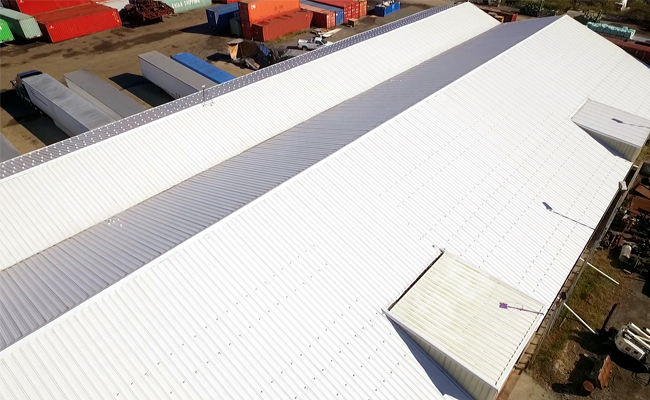
OST Trucking Co. featuring Retro-R® metal panels in Polar White.

End Results

Regardless of the specific system selected and designed, installing a retrofit metal roofing system allows the existing roof to remain in place, which saves on labor costs. It also minimizes the chance for water entry into the building during the roofing process and provides for a safer working environment. Existing rooftop equipment, vents, or light-transmitting panels can be accommodated by any of the systems described.

According to the Metal Construction Association (MCA), “retrofit metal roofing represents an economical and functional solution for building owners who want to beautify their existing structure or correct performance issues related to aging roofs and out-of-date materials. They have been employed in millions of square feet of existing commercial, industrial, retail and education facilities. The result is a new code-compliant metal roof that will last for 60-plus years, providing higher energy efficiency by reducing heat gain through the roof in summer months and reducing heat loss during winter months.”

To find out more about these retrofit systems, contact your local MBCI representative.

Market Update: June 2022

MBCI Launches Redesigned Website

Metal Roof System Retrofit Benefits

Market Update: April 2022

Find a sales representative