Building the Future of an Industry: How Collaboration, Creativity & Ignorance Can Change the Face of the Built Environment

As the design and construction industry moves forward and we all (product manufacturers, designers, and clients alike) start to seriously consider the ideas of legitimate “differentiation” (among our peers, designs, and products) the ideas of multi-industry collaboration and mass customization come to mind…
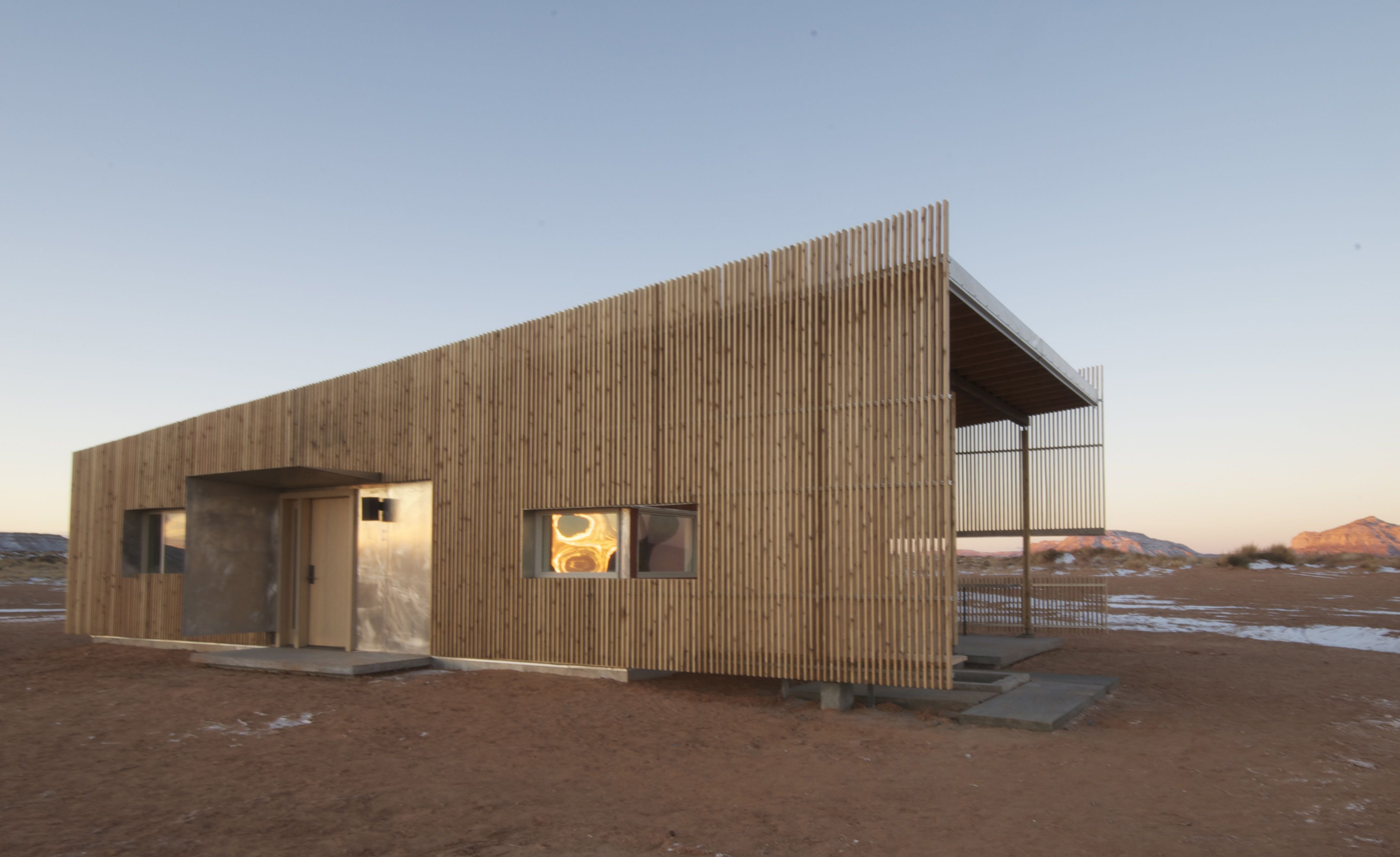
CU Denver HOZHO House
Photo courtesy of Rick Sommerfeld

Should we decide to go down this road, there are most definitely very real challenges that await: raw material costs, set-up and tooling charges, time/schedule and testing for starters. Then there’s the seemingly insurmountable challenge of multi-company and multidisciplinary coordination… At company A) “x” means one thing, while at company B) “x” means the exact opposite… How do we ensure that our products/designs/buildings don’t in a sense have two left feet after navigating this process? At the end of the day, however, should we rise to the challenge and navigate these obstacles successfully, the pay-off will be enormous. Below are a few key ways to make this happen.

START COLLABORATING FROM THE BEGINNING
Secretly, many architectural designers fancy themselves as inventors of sorts (I know that I did/still do). They are often times quite literally creating something out of seemingly thin air in order to correspond with the client’s/owner’s hopes and dreams. The only problem is when you run out of time, money or needed/interesting “building blocks”.

Earlier this year, I was approached by a senior-level principle of a world leading design firm, regarding the possibility of partnering up with MBCI in order to bring new products to market. The basic gist of the conversation was: “We have the design know-how and experience, while you guys [MBCI] have the manufacturing and testing experience. Why not partner up and bring new stuff to the market that no one else ever possibly could?” Why not indeed? Currently that is a topic that is still on the table. It is through conversations like these that true progress is really made, and I am greatly encouraged by the future of this relationship.

EMBRACE IGNORANCE AND NAIVETY
In order to move forward we must each take risks, we must look to the future as a real opportunity for change and we must embrace both ignorance and naivety for it is by only not knowing one’s “limitations” and what is (and what is not) currently “possible”, that innovation can occur.

While in graduate school at NC State, I was fortunate enough to have had more than my share of inspirational conversations with some of the world’s finest architectural and design minds, not the least of which was one particular discussion with Michael Rotondi of RoTo Architects. “I look for design inspiration in everyday life, but most importantly from my thirteen year old son and my interns. I’m too set in my ways to ever think about things much differently than I already do, but by keeping an open mind, I am always exposed to a fresh perspective.” How many of us out there are open to such a philosophy? How many of us could benefit from such a strategy? I would be willing to bet nearly everyone (and every industry).

GET INVOLVED WITH SCHOOLS
Embrace the enthusiasm of people eager to learn. Architecture/Design School is many things, but it is most assuredly anything but easy. Mental toughness and the ability to solve complex problems quickly are unspoken but very real prerequisites for graduation. Most disciplines have tests with one “right” answer. Design education takes a drastically different approach. There are quite literally countless “right” answers to the same exact problem. If you put one hundred designers in a room and ask them each for a solution to the same exact design problem you will get one hundred different answers. There are legitimate reasons for each of these answers, and throughout their education students are continuously thrust into this situation. Students must not only provide their answer but must also present their solution to a jury of their peers, professors and practitioners. This is their test… This process helps to create the strongest of work ethics (no one ever wants to be embarrassed repeatedly in a room full of their colleagues/friends), the ability to take constructive (and sometimes unconstructive) criticism, the ability to think on their feet (you can never know what they’ll ask or focus on), as well as the ability to not only come up with creative solutions but also to SELL them. Any company looking to innovate can benefit tremendously from their share of employees with this background and experience. Why not start that process earlier with direct relationships with the schools/students themselves? I challenge any company or industry to consider this approach. I can promise you that you will see tremendous results.

I am very proud of MBCI’s commitment to this ideal and to have had the opportunity to have worked with many such students during the past year. I am even more proud of MBCI’s contributions of both time and materials to two design-build studios (North Carolina State and CU Denver) this past summer as both of those projects are not only beautiful, but also support great causes (see links below). As great as these two particular projects are, I am hopeful that they are only the beginning and that we will continue to seek out and respond to similar opportunities in the future.

North Carolina State University: Floating Lab project for Durham Public Schools
About Durham Public Schools HUB Farm: http://www.dpsnc.net/programs-services/cte/hub-farm
Project: http://design.ncsu.edu/designlife/2014/02/11/and-make-it-float/

University of Colorado Denver: HOZHO House, DesignBuildBLUFF
About DesignBuildBLUFF: http://www.designbuildbluff.org/?q=node/31
Project: http://www.designbuildbluff.org/blog/?cat=131
Radiant Barrier FAQ: Everything You Want to Know but Were Afraid to Ask Because You Didn’t Want to Sound Like a Nerd

I’ve always been a huge fan of the space program (Shocked to hear that, are you?) and I remember as a kid watching the space shuttle launch and repair satellites and was always curious why everything was wrapped in shiny foil. Now, as an engineer and resident energy nerd for my company, I encounter radiant barriers often. That has closed a loop for me because it turns out the mystery foil on the satellites and equipment was indeed a radiant barrier.

Radiant barriers have been around a long time. They have been used extensively in the space program for decades and even on the Lunar Excursion Module (LEM) used to land on the moon. There are many examples of materials developed for the space program making their way into everyday life and radiant barriers are just that. Incredibly, these materials are cheap and very effective in reducing energy use in a building as well. However, they are also often misunderstood and in order to help that confusion, I recently combined the questions I get about them in a FAQ format and would like to share them with you. So, push up those taped glasses and let’s go!

1.       What is a radiant barrier?

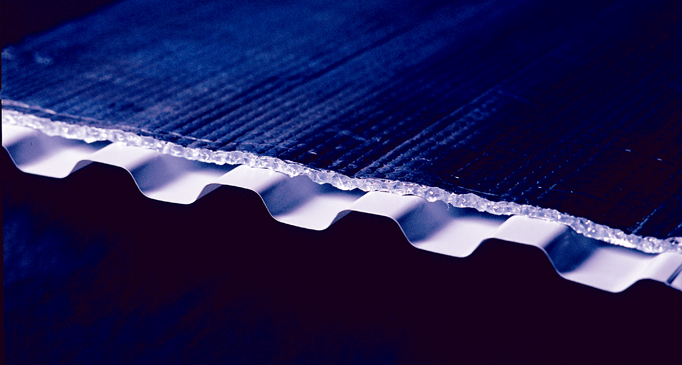
A radiant barrier is a special type of insulation that resists transmission of radiation, typically in the infrared spectrum.

2.       Gee, that’s nice. Now in layperson’s terms, how do they work?

Let’s back up a little. There is a law in thermodynamics that states heat will always travel from a warmer point to a colder point. And when it does, it does do in three possible modes: Conduction, convection, and radiation. Conduction is generally applicable to solids, i.e., a handle of a metal spoon with the other end submerged in hot soup getting warm. Convection is generally applicable to gases and fluids because they can flow, transferring energy from one point to another. Hot air rising up out of a fireplace, heating the flue as it goes is an example of heat transfer by convection. Radiation is heat traveling at light speed in the form of electromagnetic radiation, mostly in the infrared spectrum for objects at Earth surface temperatures. When you put lighter fluid on a fire and it suddenly flares, you will feel a burst of heat on your face instantly, right? That’s radiation.

So if you think about this, you will come to the conclusion that all heat from the sun must get to the Earth through radiation because of the vacuum of space. That is correct and exactly why radiant barriers are so important in the protecting satellites and astronauts from the extreme temperature swings they would be subjected to otherwise. You see, space isn’t really cold because the concept of temperature kind of breaks down in a vacuum. In reality, objects in space can be either very hot or extremely cold depending on their exposure to an energy source like the sun. So when a satellite in orbit goes behind the Earth, its temperature would plummet suddenly without a radiant barrier. That’s also part of why satellites are constantly rotating, to make them warm and cool evenly and prevent premature failure on the instruments on board.

But back to Earth-bound, near-room temperature objects: Most solids are very efficient (about 90%) at converting heat to infrared radiation or vice versa in order to match the temperature of their surroundings. But there are notable exceptions, one of which being polished aluminum, which is much less efficient at converting heat to radiation and vice versa. This means that in a vacuum (i.e., no conduction or radiation can happen) a warm object coated with polished aluminum will cool slower than it would without the coating. Thus, polished aluminum is a key ingredient of a radiant barrier and thus has saved many astronaut lives.

3.       I thought aluminum conducts heat readily but now you’re telling me it is a good insulator?

No, I’m saying it’s a good radiant barrier. Remember, those are different things. Radiant barriers don’t have to be very thick to work, so a common approach is to take a conventional insulation liner and coat it with a thin layer of aluminum. That layer doesn’t have any direct effect on the R-value of the insulation. Now, if you were to touch the radiant barrier with another solid, only then would you have solid-to-solid contact and conduction would be a factor. Fortunately, conductors can only transfer what is transmitted to them, so the insulation still limits the heat loss. But what matters is that the radiant barrier makes the insulation work more effectively when it is placed next to air, either against a cavity or lining a room, by impeding radiation release from the insulation into that adjacent space. Think of a baked potato wrapped in aluminum foil. It will stay hotter than an identical potato without the foil even though aluminum is a good conductor because the foil emits far less radiation than the potato skin, keeping the energy contained in the soon-to-be eaten hotter potato.

4.       I’ve seen that but I’ve always called it reflective insulation.

Many people do. But that name is a bit misleading, kind of like putting a statement in a FAQ. (Really, who would do that?) A radiant barrier doesn’t reflect radiation per se; it just does a bad job absorbing it. But we can leverage that behavior to increase the effectiveness of the insulation it’s attached to just as we do with a baked potato.

5.       How much does a radiant barrier increase the insulation R-value?

R-value is a measure of the resistance to heat flow through traditional insulation and isn’t really applicable to radiant barriers. While it is true that energy is energy whether it is transmitted by radiation or some other mode, the amount of energy impeded by the use of a radiant barrier depends on how it is deployed. The only way to know with much certainty how much heat it is impeding is to test or model every possible configuration and calculate a total heat transfer coefficient, or U-factor for each one. This is obviously not very practical. However, there are some references you can find on the internet that will give “effective R-values” (equal to 1/U-factor) of a radiant barrier deployed in certain common configurations. They work well as long as you read the fine print and don’t use them out of context.

6.       Then how is the effectiveness of a radiant barrier measured?

Radiant barriers can have one active or low-e face and an inactive face but you can also get them with two low-e faces as well. The emittance of the low-e facer is the key number. Remember that the lower the emittance, the better the radiant barrier. The lowest emittance readily available is 0.03. But it is a continuous scale and what really matters is difference between the emittance of the radiant barrier and the other solid objects in the room with which the barrier trades radiation. In fact, any material with lower than average thermal emittance (let’s assume that to be 0.9) will function as a radiant barrier to a certain degree.

If you are using a single-sided radiant barrier, you must be careful to install it in the orientation that will give the best results for your particular climate. Generally, this will be with the low-e side facing the predominately cooler environment, be it indoors or outdoors. If you install one with two low-e sides, then you don’t need to worry about it; winter or summer, it will help you save energy

Aluminum is also commonly alloyed with zinc to make a corrosion-resistant coating called Galvalume. This coating has an emittance around 0.15, so it actually can be used as a radiant barrier as well as a durable coating for a metal roof or wall panel. MBCI makes virtually any one of its profiles in Galvalume as well as painted colors and they can help you leverage that aspect in your building.

7.       How much money can radiant barriers save?

It depends. Radiant barriers don’t actually result in a significant direct change in room air temperature, because air is mostly transparent to infrared radiation. (I say mostly because naturally occurring greenhouse gasses like carbon dioxide and water vapor do absorb certain frequencies of infrared radiation causing them to warm slightly.) Instead, radiant barriers work by preventing radiation from escaping the interior environment in the winter and keeping it from intruding in the summer. This keeps the solid objects in the room closer to room temperature and they in turn reduce the heating or cooling load indirectly. Take the summer condition as an example. The radiant barrier slows the release of infrared radiation from the exterior heat coming through the insulation. This makes solid objects in the room (like humans) absorb less radiation from those surfaces. At the same time, those same solid objects are releasing their own radiation at the typical 90% efficiency. This results in a net radiation loss to those objects, cooling them even though the air temperature in the room doesn’t change much. The opposite happens in the winter by keeping the radiation released by the solid objects contained in the room. How much energy this saves is going to depend on what is in the room, what its emittance is, etc. The classic residential application of a radiant barrier is on the underside of the roof, adjacent to the attic air space. Because access is easy and radiant barriers are fairly cheap, paybacks in this scenario are usually in the 2-year range or less. That’s a solid investment from an energy-savings standpoint.

Another ideal and easily accessible place to put a double sided radiant barrier is on the inside of a roll-up door. MBCI’s door division, DBCI, can provide radiant barriers for most of their roll-up doors, aiding the energy efficiency of a conditioned warehouse as a prime example.

Insulated Door

So, there you have it: Everything you wanted to know about radiant barriers but were afraid to ask because you didn’t want to sound like a nerd. Fortunately, some of us remain blissfully unaware of our nerdism and are happy to answer your questions.

Dealing with Condensation on Uninsulated Metal Roofs

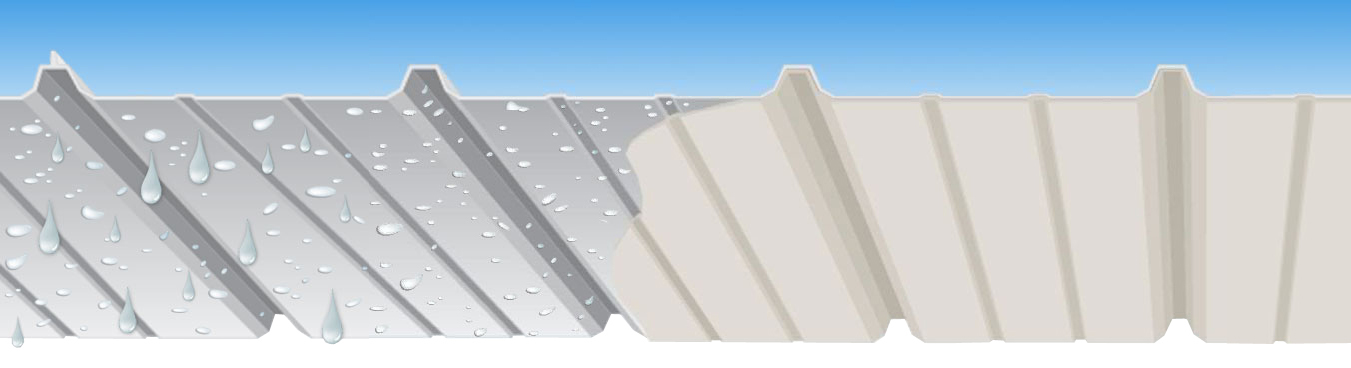
Have you ever been under a metal roof that had condensation on the bottom side of it? It is quite annoying to have the condensation falling on you like rain. Worse, if the roof is over your shop, carport, barn or self-storage unit, you have to worry about what damage it is doing to the contents of these buildings. Oftentimes people will insulate their metal roof with vinyl-backed fiberglass insulation to prevent humid air from coming into contact with the cooler metal roof, which may be at or below the dew point. If you are heating or cooling a building, adding insulation would certainly be a good idea. But what about buildings that aren’t heated or cooled? If you don’t want to put vinyl-backed insulation in your roof, what other options are there?

How Dr!pStop Can Help

The answer is a product called Dr!pStop, which is a felt-like material with a rubber backer that can be applied to the back side of metal panels that will trap the moisture as the condensation forms. When conditions change, usually the ambient air temperature rises raising the dew point, the moisture is released from the Dr!pStop material back into the air. MBCI can apply this material to the back of its coils (either Galvalume® Plus or painted) and then roll form the metal into MasterRib® and PBR panels.

dripstop

The Dr!pStop material is a very tough, light gray material that resists ripping, tearing or deterioration. It resists dirt and grime; is antimicrobial and is very easy to clean with a hose or pressure washer. The rubber backer on the material helps protect the back side of the panel from corrosion, though there is no protection at the panel’s cut edges. The material is approved for smoke generation and flame spread per UL 723. It also is good for acoustics and helps dampen sound from either inside or outside the building.

interior of metal building

Roof panels with Dr!pStop are ideal for use in industrial plants, sports areas, aircraft hangars, non-climate controlled self-storage units, garages, carports, garden centers and many other buildings.

metal roofing insulation

Separating Fact from Fiction: Let Your Meter be Your Guide

Being a building scientist is kind of like being a librarian. You have to separate fact from fiction. Case in point: The Green Building Movement. I’ve been a building designer for 20 years and I have never seen the kind of change and repositioning of building science in the time that I’ve seen in just the last five years. And of course, with that come agendas, minutia, politics and confusion. It’s unavoidable. So, when people ask me about green building, I feel the duty to encourage them to stick to what is tangible and measurable and try to stay out of speculation. Yeah, ok, that’s pretty obvious advice. But it cuts deeper than that because you actually have to track meaningful, FACT-BASED metrics.

Consider the regional material credit in LEED. The purpose of that credit is to avoid burning fuel to transport raw materials to the project site. So, if the final manufacturing location of a product is within a 500 mile radius of the project and you can prove that the material used in the product was extracted and/or harvested from the earth within that circle as well, you get credit for using it.  But does that truly guarantee the minimum carbon footprint? Most products used in buildings have been through a long and complex supply chain of co-mingling and transportation between intermediate points and the simplistic criterion of only considering the end points of that chain isn’t going to guarantee any level of performance, so why track the metric?

At the other end of that spectrum is energy use. This is NOT the same as energy efficiency, mind you. The definition of efficiency is the amount of work done divided by the amount of resources consumed to achieve that work. If my efficiency is 1, then I’ve wasted nothing. If it’s zero, I’ve wasted everything. It seems like a good metric to use, but it isn’t always obvious what number to use in the numerator (that’s the top number in a fraction, by the way) which makes efficiency somewhat subjective as a metric.

Electricity use on the other hand, is an absolute metric. You use electricity and have to pay for it. You have a meter to tell you how much you’ve bought. That’s a pretty convenient thing because you don’t need a fancy computer with wireless controls and bells and whistles (which use electricity, by the way) to print a graph of your electricity usage. All you have to do is get up off your derriere and look at it.  (Yes, it is unfortunate that meters are outside but you need the sun exposure to produce Vitamin D anyway.)

So when it comes to things like roof top solar, the subject of my last blog, the energy you make directly offsets the energy you use. The meter “spins” slower or even backwards (net-metered solar installations use digital meters, but whatever) and at the end of the month, less electricity is used.  Simple, predictable and efficient; there is no question what your impact is.

Now when it comes to energy used for climate control, you are in a quandary.  The energy you use is going to be highly dependent on the outside conditions, so how do you account for that? Well, the fact of the matter is that weather, although it varies quite a bit from day to day and year to year, follows a very consistent pattern over time and some things you can do will always make a difference.

Most commercial buildings are under insulated. We know that from studies conducted over many years by the government. The reason is simple: Commercial buildings are not usually built by the electricity bill payer, so the motivation to invest in things like extra insulation and insulated windows is not there. Therefore, if you should inherit a commercial building for your business, before you move in, you should probably peel back those ceiling tiles and tap on that glass to see what is between you and the outside world.

Should you discover that you need a little extra help, there are some great products on the market these days and one of them is spray-foam insulation. However, if the building is old enough and needs a new exterior finish on the roof or wall anyway, consider an all-in-one solution like an insulated metal panel. This product combines one of the most durable exterior materials around – coated steel – and the same great insulation performance as the spray-on foams without the special equipment. Plus, the excellent air barrier performance minimizes air infiltration. And here is a tip: Roof or wall, choose an exterior color that fits your climate. Consider using lighter colors in the south and darker colors in the north.  That can make a substantial difference if the building is under insulated. The poor meter won’t even know what hit it.

MBCI Celebrates New Insulated Metal Panel Manufacturing Facility Grand Opening

On Thursday, June 28th, MBCI held the Grand Opening celebration of its new 116,000 square foot insulated metal panel (IMP) manufacturing facility in Mattoon, Ill. MBCI’s first facility was opened in Jackson, Miss., in 2010.

Officials from the state of Illinois, the city of Mattoon, the Mattoon Chamber of Commerce and Coles Together, the economic development organization for Coles County, took part in the celebration, along with executives from NCI Building Systems and MBCI, a number of customers from the area, and our esteemed workers at the facility and local sales force.

After a brief welcome from our Master of Ceremonies, Executive Director of the Mattoon Chamber of Commerce Mary Wetzel, NCI’s President and CEO, Norm Chambers, spoke about how the success of our IMP product line allowed us to open the facility as an investment for the future.

Also speaking at the event were State Senator Dale Righter, Mattoon Mayor Tim Gover and the Director of the Illinois Department of Commerce and Economic Opportunity David Vaught.

MBCI President Mark Dobbins closed the speaking portion of the event by thanking all of the people at NCI, MBCI and our vendors that had a part in renovating the facility and creating the new line. He went on to thank the employees at the facility for all of their hard work up to this date and in the months and years to come.

The event was closed with lunch and a tour of the manufacturing line for all in attendance.

In the end, the event was a huge success, and we are excited to start serving our customers with products from our innovative manufacturing line.

Find a sales representative